For research use only. Not for human or veterinary use. 21+.
Buy one, get one freeOn every vial · no code neededShop the offer
MANUFACTURED & SHIPPED FROM THE USA
Peptides · GH Axis

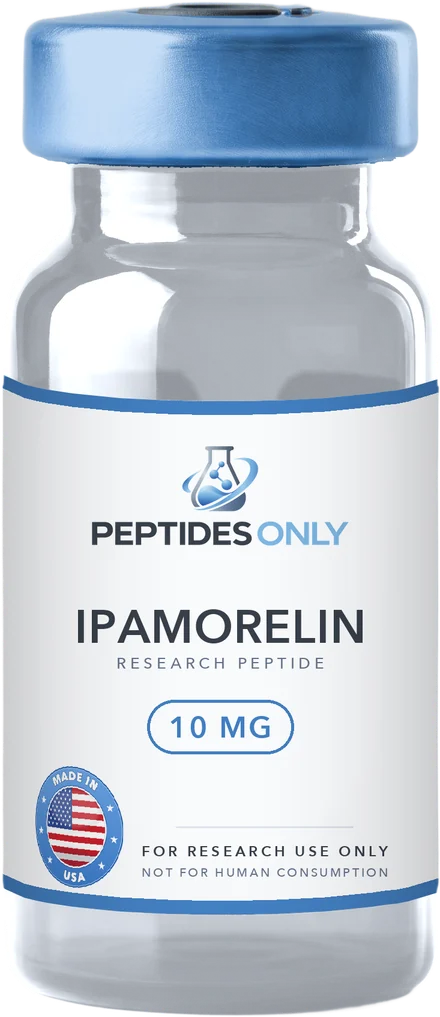
Ipamorelin

99.90% purity · Lot VNA7TB · tested May 12, 2026
CAS170851-70-4FormulaC38H49N9O5MW711.85

Selective ghrelin-receptor agonist for GH-release research.

  • Independently tested
  • Lot-matched COA
  • Lyophilized for stability
  • Ships from the USA
Research use only. Not for human or veterinary use. Sold to qualified researchers aged 21+.
$85.002 for $85 — $42.50 per vial
Buy one, get one free. Mix and match any 2 eligible vials and the lower-priced one is free — applied automatically. One-time purchases only.
1
Ipamorelin$85.002 for $85
Lot-matched documentation. Every order ships with the certificate for its lot. If a vial arrives damaged or doesn't match its paperwork, tell us within 72 hours and we'll replace it.

Latest lab results

Third-party tested

Ipamorelin 10 mg

Purity (HPLC-UV)
99.90%
Identity (LC-MS)
Confirmed — Ipamorelin
Net content
13.12 mg (label 10 mg)
Lot
VNA7TB
Tested
May 12, 2026
Lab
Freedom Diagnostics Testing
View certificate (PDF)

Your order ships with the certificate for its own lot. 1 earlier certificate for this size in the COA library.

About Ipamorelin

Selective ghrelin-receptor agonist for GH-release research.

Supplied as

10 mg per vial, as a lyophilized powder in a sealed glass vial with a crimped cap. The lot number on the label matches the certificate of analysis in the COA library.

Storage and handling

Store lyophilized powder frozen (−20 °C) or refrigerated, sealed and away from light. Once reconstituted, keep refrigerated (2–8 °C).

Handle in a laboratory setting using appropriate protective equipment. Consult the certificate of analysis and safety data for lot-specific information.

Important research notice. This product is intended solely for in-vitro and laboratory research. It is not a drug, food, supplement or cosmetic, has not been evaluated by the FDA, and must not be used in humans or animals. Peptides Only does not provide usage or dosing information.

Research summary

Ipamorelin is a synthetic pentapeptide (Aib-His-D-2-Nal-D-Phe-Lys-NH2) that releases growth hormone (GH) by activating the growth hormone secretagogue receptor, the receptor for the stomach hormone ghrelin. Novo Nordisk researchers described it in 1998 as the first selective GH secretagogue because, in swine, it raised GH without the ACTH and cortisol increases seen with GHRP-2 and GHRP-61. It reached a phase 2 trial for postoperative ileus but is not an approved medicine2; it is sold for laboratory research only.

Also known as
NNC 26-0161
Sequence
Aib-His-D-2-Nal-D-Phe-Lys-NH2

What is ipamorelin?

Ipamorelin came out of a medicinal chemistry program at Novo Nordisk, from a series of compounds lacking the central Ala-Trp dipeptide of GHRP-1. In primary rat pituitary cells it released GH with potency and efficacy similar to GHRP-6, and experiments with GHRP and GHRH antagonists showed that it works through the GHRP-type receptor rather than the GHRH receptor1. In early pharmacokinetic work it carried the code NNC 26-01613.

That receptor, the growth hormone secretagogue receptor (GHS-R), was cloned in 1996 as a G protein-coupled receptor of the pituitary and hypothalamus4. In 1999 its natural ligand was identified as ghrelin, a 28-amino-acid acylated peptide from the stomach5. Ipamorelin is therefore described as a ghrelin-receptor agonist or ghrelin mimetic6.

Why ipamorelin is called selective

Earlier GH-releasing peptides also raise other pituitary and adrenal hormones. In conscious swine, GHRP-6 and GHRP-2 both increased plasma ACTH and cortisol, whereas ipamorelin did not raise either beyond the levels seen after GHRH stimulation, even at more than 200 times the amount needed for half-maximal GH release. None of the secretagogues tested changed FSH, LH, prolactin or TSH1.

That selectivity was shown in specific animal models over short experiments. It explains why ipamorelin is chosen when researchers want GHS-R activation with little adrenal-axis signal; it is not evidence about long-term effects in people.

What the research has examined

  • Human pharmacokinetics. In healthy men given intravenous infusions at five rates, ipamorelin showed proportional pharmacokinetics with a terminal half-life of about 2 hours, and each infusion produced a single episode of GH release that peaked at about 40 minutes and then declined7.
  • Rat pharmacokinetics. Ipamorelin's systemic clearance was about fivefold lower than that of GHRP-6, and it was excreted mainly in urine rather than bile3.
  • Bone. In adult female rats, 15 days of ipamorelin increased longitudinal bone growth without changing total IGF-I8; over 12 weeks, ipamorelin and GHRP-6 increased bone mineral content, which reflected larger bone dimensions rather than higher volumetric density9.
  • Body fat. In GH-deficient and GH-intact mice, ipamorelin increased fat pad weight relative to body weight, and GH secretagogue treatment raised food intake and serum leptin; the authors concluded that these effects were GH-independent10.
  • Gut motility. In a rat model of postoperative ileus, repeated intravenous ipamorelin increased fecal output and food intake after surgery6. A phase 2, double-blind trial in 114 adults after bowel resection found it well tolerated but showed no significant difference from placebo in time to a tolerated solid meal (median 25.3 vs 32.6 hours, p = 0.15)2.

Ipamorelin vs GHRH analogues

Ipamorelin and GHRH analogues such as sermorelin and CJC-1295 without DAC act on the same pituitary cells through different receptors. In healthy men, a GH-releasing hexapeptide given together with GHRH released GH synergistically, which the authors took as evidence that the two pathways act independently11. That body of work is why the two classes are studied together, as in the CJC-1295 + Ipamorelin vial. Our article Ipamorelin vs Sermorelin vs Tesamorelin compares them in detail.

Limitations of the evidence

  • Human data are thin: one pharmacokinetic study in healthy men7 and one phase 2 trial that did not meet its efficacy endpoints2.
  • Most findings come from rats, mice and swine, much of it from the developer's own laboratories1,8.
  • Selectivity was characterized for a short list of hormones in short animal experiments1; long-term endocrine effects have not been studied.
  • A 2026 clinical review included ipamorelin among GH-axis peptides used outside regulated channels and noted uncertainty about the composition of such products12. Every Peptides Only lot ships with a lot-matched certificate of analysis (HPLC purity and mass-spec identity) from an independent lab, published at our COA library.

Ipamorelin FAQ

Is ipamorelin a GHRP?

It descends from the GHRP family, coming from a series built on GHRP-1, and like GHRP-6 it acts at the GH secretagogue (ghrelin) receptor1. It is a pentapeptide, one residue shorter than the hexapeptide GHRPs.

Is ipamorelin approved by the FDA?

No. It was evaluated in a phase 2 trial for postoperative ileus that did not show a significant difference from placebo2, and it has not been approved for any use.

What is the difference between ipamorelin and sermorelin?

Sermorelin is a fragment of GHRH and acts at the GHRH receptor; ipamorelin is a synthetic ghrelin-receptor agonist1,4. Both lead to GH release from the same pituitary cells, but through separate receptors.

What is the half-life of ipamorelin?

In healthy volunteers who received it by intravenous infusion, the terminal half-life was about 2 hours7.

Does ipamorelin raise cortisol?

In the original swine studies it did not raise ACTH or cortisol beyond the levels seen with GHRH, unlike GHRP-2 and GHRP-61. Long-term human data on this point do not exist.

Further reading

References

  1. Raun K, Hansen BS, et al. Ipamorelin, the first selective growth hormone secretagogue. Eur J Endocrinol. 1998;139(5):552-61. PubMed 9849822
  2. Beck DE, Sweeney WB, et al. Prospective, randomized, controlled, proof-of-concept study of the Ghrelin mimetic ipamorelin for the management of postoperative ileus in bowel resection patients. Int J Colorectal Dis. 2014;29(12):1527-34. PubMed 25331030
  3. Johansen PB, Hansen KT, et al. Pharmacokinetic evaluation of ipamorelin and other peptidyl growth hormone secretagogues with emphasis on nasal absorption. Xenobiotica. 1998;28(11):1083-92. PubMed 9879640
  4. Howard AD, Feighner SD, et al. A receptor in pituitary and hypothalamus that functions in growth hormone release. Science. 1996;273(5277):974-7. PubMed 8688086
  5. Kojima M, Hosoda H, et al. Ghrelin is a growth-hormone-releasing acylated peptide from stomach. Nature. 1999;402(6762):656-60. PubMed 10604470
  6. Venkova K, Mann W, et al. Efficacy of ipamorelin, a novel ghrelin mimetic, in a rodent model of postoperative ileus. J Pharmacol Exp Ther. 2009;329(3):1110-6. PubMed 19289567
  7. Gobburu JV, Agersø H, et al. Pharmacokinetic-pharmacodynamic modeling of ipamorelin, a growth hormone releasing peptide, in human volunteers. Pharm Res. 1999;16(9):1412-6. PubMed 10496658
  8. Johansen PB, Nowak J, et al. Ipamorelin, a new growth-hormone-releasing peptide, induces longitudinal bone growth in rats. Growth Horm IGF Res. 1999;9(2):106-13. PubMed 10373343
  9. Svensson J, Lall S, et al. The GH secretagogues ipamorelin and GH-releasing peptide-6 increase bone mineral content in adult female rats. J Endocrinol. 2000;165(3):569-77. PubMed 10828840
  10. Lall S, Tung LY, et al. Growth hormone (GH)-independent stimulation of adiposity by GH secretagogues. Biochem Biophys Res Commun. 2001;280(1):132-8. PubMed 11162489
  11. Bowers CY, Reynolds GA, et al. Growth hormone (GH)-releasing peptide stimulates GH release in normal men and acts synergistically with GH-releasing hormone. J Clin Endocrinol Metab. 1990;70(4):975-82. PubMed 2108187
  12. Dominikowski A, Rękoś Z, et al. The emerging landscape of performance-enhancing peptides modulating GH-IGF1 axis: bridging the gap between clinical evidence and patient self-administration. Front Endocrinol (Lausanne). 2026;17:1822475. PubMed 42395176

Research summary reviewed 2026-10-26 against the cited literature.

More Peptides

You might also need

View all
GHK-Cu 50 mg — Peptides Only, research use onlyBestsellerBuy One Get One
Lyophilized vial

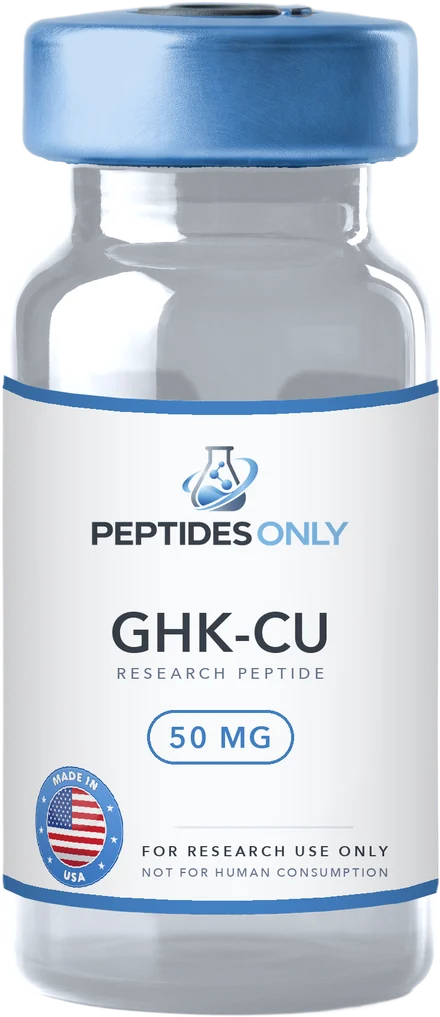
GHK-Cu

Copper-binding tripeptide used in collagen and skin-matrix research.
$50.00
2 for $50 · $25/vial
NAD+ 100 mg — Peptides Only, research use onlyBestsellerBuy One Get One
Lyophilized vial

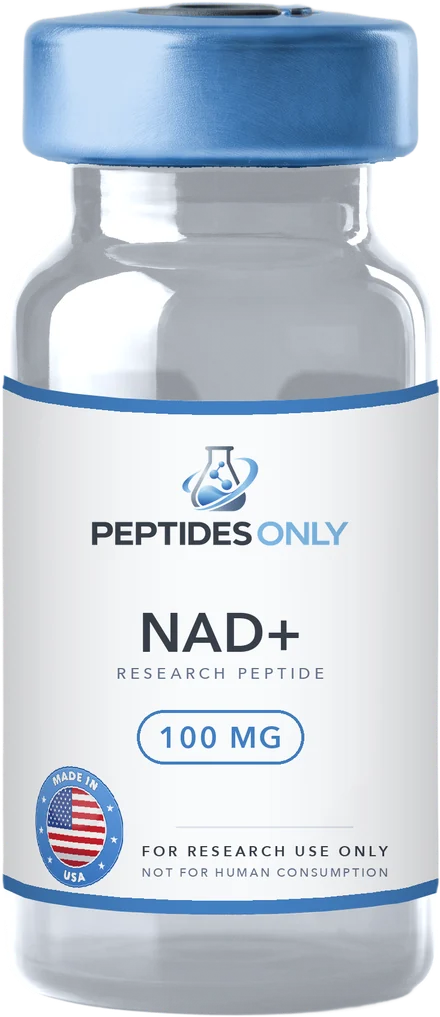
NAD+

Essential coenzyme for studies of cellular metabolism and ageing.
$50.00
2 for $50 · $25/vial

Contact Peptides Only

Operated by DND Wellness LLC · 1309 Coffeen Ave, Suite 1200, Sheridan, WY 82801.

support@peptides-only.com · (508) 404-8124

Use the chat widget to ask a question. Informational and promotional text messages require separate, optional consent. Message frequency varies. Msg & data rates may apply. Reply STOP to unsubscribe or HELP for help. Consent is not a condition of purchase. 21+.

SMS consent & support · SMS terms & Terms of Service · Privacy Policy