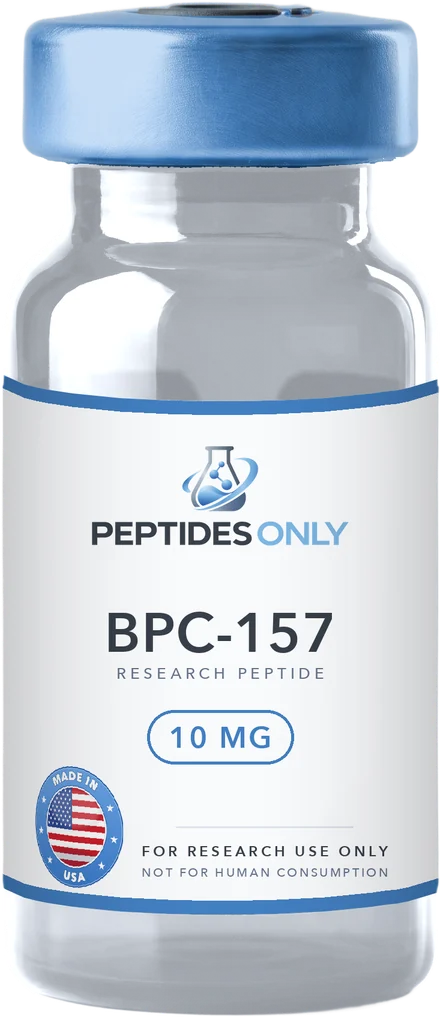
Lyophilized vial
BPC-157
Stable gastric pentadecapeptide, a staple of tissue-repair research.
$85.00
2 for $85 · $42.50/vial

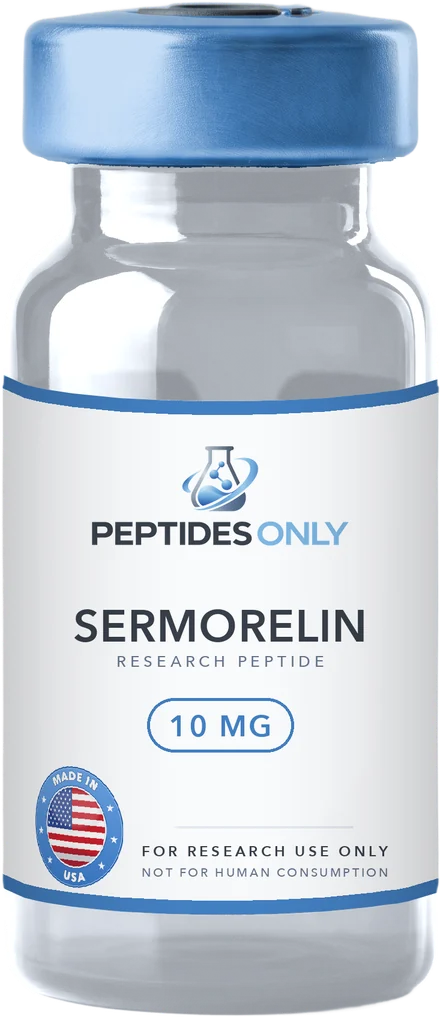
GHRH (1-29) analogue for pituitary-axis research.
The certificate for the current lot is being uploaded. Every order ships with the COA for its lot, or request it now.
GHRH (1-29) analogue for pituitary-axis research.
10 mg per vial, as a lyophilized powder in a sealed glass vial with a crimped cap. The lot number on the label matches the certificate of analysis in the COA library.
Store lyophilized powder frozen (−20 °C) or refrigerated, sealed and away from light. Once reconstituted, keep refrigerated (2–8 °C).
Handle in a laboratory setting using appropriate protective equipment. Consult the certificate of analysis and safety data for lot-specific information.
Sermorelin is GHRH(1-29)NH2: the first 29 amino acids of human growth hormone-releasing hormone with a C-terminal amide, the shortest synthetic fragment that keeps the full biological activity of the native 44-residue hormone1. As sermorelin acetate (Geref), it was FDA-approved as a pituitary diagnostic in 1990 and for idiopathic growth hormone deficiency in children in 1997; the manufacturer discontinued both products in 2008, and FDA later found they were not withdrawn for reasons of safety or effectiveness. The peptide sold here is for laboratory research only.
Growth hormone-releasing hormone (GHRH) was characterized in 1982 by two groups working from pancreatic tumors that produced it; one tumor had caused acromegaly, and the peptide isolated from it was 44 amino acids long2,3. Sermorelin is the first 29 residues of that sequence, amidated at the C terminus, and it specifically stimulates growth hormone (GH) secretion from the anterior pituitary1.
It acts at the GHRH receptor, a G protein-coupled receptor expressed predominantly, if not exclusively, in the anterior pituitary, which binds GHRH with high affinity and signals through cyclic AMP4.
According to FDA's March 2013 notice in the Federal Register, sermorelin acetate was marketed as Geref by EMD Serono under two applications. A diagnostic product, approved on December 28, 1990, was indicated for evaluating the ability of the pituitary somatotroph to secrete GH. A second product, approved on September 26, 1997, was indicated for idiopathic GH deficiency in children with growth failure.
In 2008 EMD Serono told FDA that both products were being discontinued and asked for the applications to be withdrawn; FDA withdrew approval of both effective June 18, 2009. In 2013, responding to a citizen petition, FDA determined that neither Geref product had been withdrawn from sale for reasons of safety or effectiveness. The notice does not give the company's business reasons.
In the open-label Geref International Study Group trial, 110 previously untreated prepubertal children with GH deficiency received GHRH(1-29) for up to a year. In the 86 eligible for efficacy analysis, mean height velocity rose from 4.1 cm per year at baseline to 8.0 at six months and 7.2 at twelve months, without excessive IGF-I generation or changes in fasting glucose5.
A 1999 review concluded that intravenous sermorelin was a rapid and relatively specific diagnostic test for GH deficiency, although a normal response could not rule out deficiency of hypothalamic origin. It noted that height-velocity gains were smaller than with somatropin in indirect comparisons, and that transient facial flushing and local reactions at the administration site were the most common adverse events1.
In adults, a 1992 study at the National Institute on Aging gave GHRH(1-29) for 14 days to 10 healthy older men. At the higher of two amounts tested, mean 24-hour GH, GH peak amplitude and IGF-I rose to levels no longer different from those of young men, with no change in fasting glucose6. That was a short hormone-level study, not a test of clinical outcomes.
In human plasma, dipeptidyl peptidase IV cuts GHRH, including the 1-29 fragment, between residues 2 and 3; a D-amino acid at position 1 or 2 prevents this7. The resulting fragment has less than one-thousandth of the original activity, and intact GHRH(1-44) had a half-life of about 6.8 minutes after intravenous administration in people8. The corresponding sermorelin metabolite, GHRH(3-29), has been detected in human plasma by anti-doping methods9.
Later analogues such as CJC-1295 without DAC and tesamorelin carry N-terminal modifications intended to resist this breakdown. See CJC-1295 with DAC vs without DAC and Ipamorelin vs Sermorelin vs Tesamorelin for comparisons.
It was. Geref (sermorelin acetate) was approved in 1990 as a diagnostic and in 1997 for idiopathic GH deficiency in children; both products were discontinued in 2008 and their approvals withdrawn in 2009 at the manufacturer's request, according to FDA's 2013 Federal Register notice. Peptides Only sells sermorelin as a research chemical, not as a drug.
FDA's 2013 review found that Geref was not withdrawn from sale for reasons of safety or effectiveness. The notice records the manufacturer's discontinuation but does not state its commercial reasons.
It is a fragment of it: residues 1 to 29 of the 44-amino-acid human hormone, amidated at the C terminus, which retains full biological activity2,1.
CJC-1295 is built on a tetrasubstituted version of the same 29-residue sequence; the original compound also carries an albumin-binding lysine that extends its time in circulation11. The version sold without that lysine is CJC-1295 without DAC. Our comparison article covers both.
Sermorelin acetate is the acetate salt of the peptide and was the form used in Geref. The counter-ion does not change the amino-acid sequence.
Research summary reviewed 2026-10-26 against the cited literature.
Stable gastric pentadecapeptide, a staple of tissue-repair research.
Copper-binding tripeptide used in collagen and skin-matrix research.
Essential coenzyme for studies of cellular metabolism and ageing.
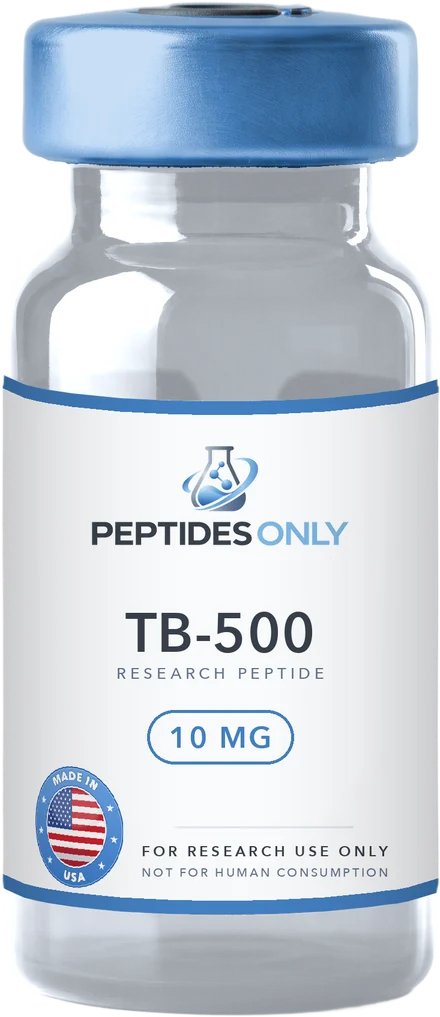
Thymosin beta-4 fragment studied for cell migration and repair.
Operated by DND Wellness LLC · 1309 Coffeen Ave, Suite 1200, Sheridan, WY 82801.
support@peptides-only.com · (508) 404-8124
Use the chat widget to ask a question. Informational and promotional text messages require separate, optional consent. Message frequency varies. Msg & data rates may apply. Reply STOP to unsubscribe or HELP for help. Consent is not a condition of purchase. 21+.
SMS consent & support · SMS terms & Terms of Service · Privacy Policy