
Peptide Storage and Stability: How to Store Lyophilized Peptides
Lyophilized peptides keep best sealed, dry, dark and frozen (−20 °C, or −80 °C for long-term storage), and the closed vial should reach room temperature before it is opened. Each of these rules traces back to a handful of degradation pathways, chiefly oxidation, deamidation, hydrolysis and aggregation, which this guide explains, along with the sequence features that make some peptides more fragile than others.
Why do peptides degrade?
Peptide and protein instability falls into two families. Chemical instability changes covalent structure: proteolysis, deamidation, oxidation, racemization and beta-elimination. Physical instability changes how molecules behave without breaking bonds: aggregation, precipitation, denaturation and adsorption to surfaces1. Two decades of later work refined these categories and showed how closely they interact2; oxidation, for example, often alters higher-order structure and can induce aggregation3.
The drivers are few. Hydrolysis and deamidation are reactions with water, rates rise with temperature, and oxidation is driven by contaminating oxidants, trace metal ions and light, with pH and buffer composition also playing a part4. That is why peptides are shipped and stored as lyophilized solids: proteins and peptides often have to be made into solid forms to reach an acceptable shelf life, and freeze-drying is the most common way to do it5.
The main degradation pathways
- Oxidation. Methionine, cysteine, histidine, tryptophan and tyrosine are the residues most susceptible4. In a formulation study of insulin-like growth factor I, methionine oxidation depended strongly on light exposure, storage temperature and oxygen content, and ran at similar rates in solution and in the solid state6, so a dry powder is not immune: a sealed vial and darkness still matter. Oxidized proteins and peptides can aggregate and lose biological activity3.
- Deamidation and isomerization. Asparagine can lose its side-chain amide through a cyclic succinimide intermediate, producing a mixture of aspartate and iso-aspartate forms. In a model hexapeptide containing Asn-Gly, deamidation had a half-life of only 1.4 days at 37 °C and pH 7.4; replacing the glycine with a bulky residue slowed it 33- to 50-fold, and an aspartate in the same position formed the succinimide 34 times more slowly7.
- Hydrolysis. Peptide bonds can be cleaved by water, and aspartate is a weak point. In a model Asp-Gly hexapeptide, the Asp-Gly bond was cleaved by acid-catalyzed hydrolysis at very low pH; at pH 4 to 5 the peptide both cleaved and isomerized, and above pH 6 isomerization was the only reaction observed8.
- Aggregation. Peptides can self-associate into amorphous aggregates or ordered fibrils. Sequence, concentration, pH, net charge, excipients, surfaces and interfaces, temperature, agitation and freeze-drying all influence it9.
- Adsorption. Peptides stick to container walls. Recovery of labeled peptides differed substantially between glass and plastic tubes, siliconizing reduced recovery, and adding a carrier protein improved it10. In an assay, this loss looks like degradation even though the peptide is simply left on the tube.
How to store lyophilized peptides
A lyophilized peptide is the most stable form you will handle, but it is not inert. Residual moisture matters: in a lyophilized antibody formulation stored for up to a year, higher moisture reduced chemical stability whether the solid was glassy or rubbery, and in the glassy state degradation followed temperature-dependent (Arrhenius) kinetics11. Light and oxygen matter too, because oxidation proceeds in the solid state4,6.
- Keep vials sealed and frozen: −20 °C is standard, and −80 °C suits long-term storage.
- Keep them dark, in their box or an opaque container.
- Keep them dry. Store vials that will be opened repeatedly with a desiccant.
- Let the closed vial reach room temperature, about 20–30 minutes, before opening it, so moisture does not condense on the cold powder.
- Minimize the time a vial is open; if dry nitrogen or argon is available, flush the headspace before resealing.
- Avoid frost-free freezers for long-term storage, because their defrost periodically warms the contents.
- Move vials to cold, dark storage on arrival. Short ambient exposure in transit matters far less for a dry solid than for a solution, which is why peptides ship lyophilized5.
Sequence features that affect stability
Because the pathways are residue-specific, a peptide's sequence is the best predictor of how carefully it needs to be stored. Semax (Met-Glu-His-Phe-Pro-Gly-Pro) begins with a methionine12; Epithalon (Ala-Glu-Asp-Gly) contains an Asp-Gly bond13, the motif that isomerized and was cleaved in the model hexapeptide studies7,8. Neither observation is a measured shelf life for those compounds, but both explain why sealed, cold, dark storage is the sensible default for Semax and Epithalon.
| Sequence feature | Main risk | What it means for storage | Examples |
|---|---|---|---|
| Methionine (Met) | Oxidation to methionine sulfoxide | Limit oxygen and light; keep vials sealed | Semax, MOTS-c |
| Cysteine (free thiol) | Oxidation and disulfide formation | Limit oxygen and trace metals | L-Glutathione |
| Tryptophan (Trp) | Light-induced oxidation | Protect from light | MOTS-c |
| Asn followed by Gly | Deamidation through a succinimide | Keep the powder dry; the reaction needs water and speeds up with warmth | Check the sequence |
| Asp followed by Gly | Isomerization; cleavage at low pH | Keep the powder dry and cold | Epithalon |
| Hydrophobic stretches | Aggregation and adsorption to surfaces | Keep sealed and cold; note it when reading a COA's purity | Check the sequence |
Signs a peptide may have degraded
Visible changes, such as discoloration or a cake that has shrunk into a sticky residue, are late signs, and their absence proves little. Oxidation, deamidation and isomerization change a peptide's mass slightly or, in the case of isomerization, not at all, and they leave the powder looking identical; analytical methods such as HPLC and mass spectrometry are needed to detect them.
That is also what a certificate of analysis measures. Peptides Only publishes a lot-matched COA from an independent lab, with HPLC purity and mass-spec identity, for every lot in the COA library; how to read a peptide COA explains each field. A COA describes the material as tested. How the peptide is stored afterwards determines how long that result holds.
Limitations and what is not known
Most of the quantitative stability literature comes from protein pharmaceuticals and from model peptides, such as the hexapeptides used to map asparagine and aspartate chemistry1,7,8. Those studies identify which residues and conditions carry risk, but they do not give a shelf life for any particular research peptide. A figure such as the 1.4-day half-life of an Asn-Gly hexapeptide at 37 °C7 is useful as an order of magnitude, not a prediction. When a study depends on peptide integrity over time, the reliable answer is to measure it under your own storage conditions.
Frequently asked questions
How long do lyophilized peptides last?
There is no single figure. Sealed, dry, dark and frozen, a lyophilized peptide is far more stable than the same peptide in solution5, but its stability still depends on sequence, residual moisture and temperature11. Use the expiry date on the vial and the lot's certificate of analysis as the reference points.
Do peptides need to be refrigerated?
Lyophilized peptides are best kept frozen for storage, with the refrigerator acceptable for short periods, because degradation reactions run faster as temperature rises4,11.
Is −20 °C or −80 °C better for storing peptides?
Both are standard. Lower temperatures slow chemical and physical degradation further11, so −80 °C is preferred for long-term storage of valuable stocks, while −20 °C suits most lyophilized vials. Either is better than a frost-free freezer, whose defrost periodically warms the contents.
Does shipping at room temperature damage lyophilized peptides?
Short exposures matter far less for a dry solid than for a solution, because removing water is what gives lyophilized products their shelf life5. Oxidation can still proceed in the solid state6, so move vials to cold, dark storage on arrival.
References
- Manning MC, Patel K, et al. Stability of protein pharmaceuticals. Pharm Res. 1989;6(11):903-18. PubMed 2687836
- Manning MC, Chou DK, et al. Stability of protein pharmaceuticals: an update. Pharm Res. 2010;27(4):544-75. PubMed 20143256
- Torosantucci R, Schöneich C, et al. Oxidation of therapeutic proteins and peptides: structural and biological consequences. Pharm Res. 2014;31(3):541-53. PubMed 24065593
- Li S, Schöneich C, et al. Chemical instability of protein pharmaceuticals: mechanisms of oxidation and strategies for stabilization. Biotechnol Bioeng. 1995;48(5):490-500. PubMed 18623513
- Wang W. Lyophilization and development of solid protein pharmaceuticals. Int J Pharm. 2000;203(1-2):1-60. PubMed 10967427
- Fransson J, Florin-Robertsson E, et al. Oxidation of human insulin-like growth factor I in formulation studies: kinetics of methionine oxidation in aqueous solution and in solid state. Pharm Res. 1996;13(8):1252-7. PubMed 8865322
- Geiger T, Clarke S. Deamidation, isomerization, and racemization at asparaginyl and aspartyl residues in peptides. Succinimide-linked reactions that contribute to protein degradation. J Biol Chem. 1987;262(2):785-94. PubMed 3805008
- Oliyai C, Borchardt RT. Chemical pathways of peptide degradation. IV. Pathways, kinetics, and mechanism of degradation of an aspartyl residue in a model hexapeptide. Pharm Res. 1993;10(1):95-102. PubMed 8430066
- Zapadka KL, Becher FJ, et al. Factors affecting the physical stability (aggregation) of peptide therapeutics. Interface Focus. 2017;7(6):20170030. PubMed 29147559
- Goebel-Stengel M, Stengel A, et al. The importance of using the optimal plasticware and glassware in studies involving peptides. Anal Biochem. 2011;414(1):38-46. PubMed 21315060
- Breen ED, Curley JG, et al. Effect of moisture on the stability of a lyophilized humanized monoclonal antibody formulation. Pharm Res. 2001;18(9):1345-53. PubMed 11683251
- Magrì A, Tabbì G, et al. Influence of the N-terminus acetylation of Semax, a synthetic analog of ACTH(4-10), on copper(II) and zinc(II) coordination and biological properties. J Inorg Biochem. 2016;164:59-69. PubMed 27586814
- Khavinson V, Diomede F, et al. AEDG Peptide (Epitalon) Stimulates Gene Expression and Protein Synthesis during Neurogenesis: Possible Epigenetic Mechanism. Molecules. 2020;25(3):609. PubMed 32019204
Compounds discussed
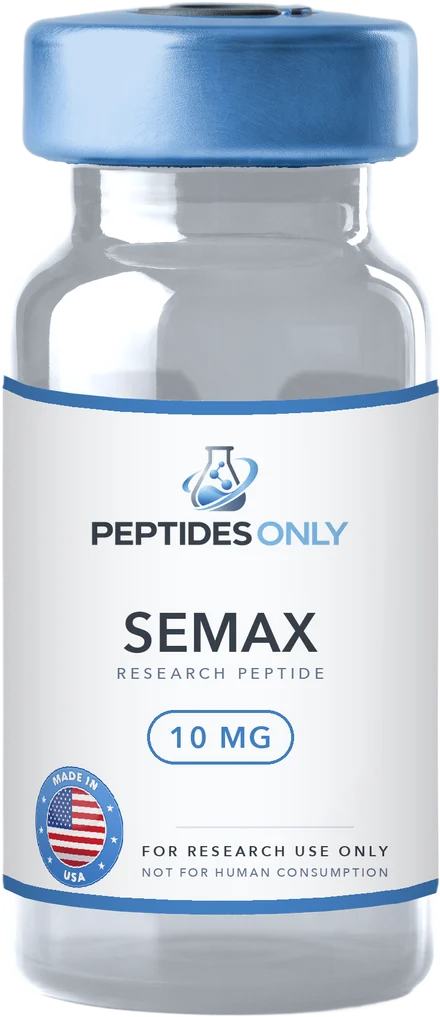
Semax
ACTH (4-10) analogue studied in BDNF-expression research.
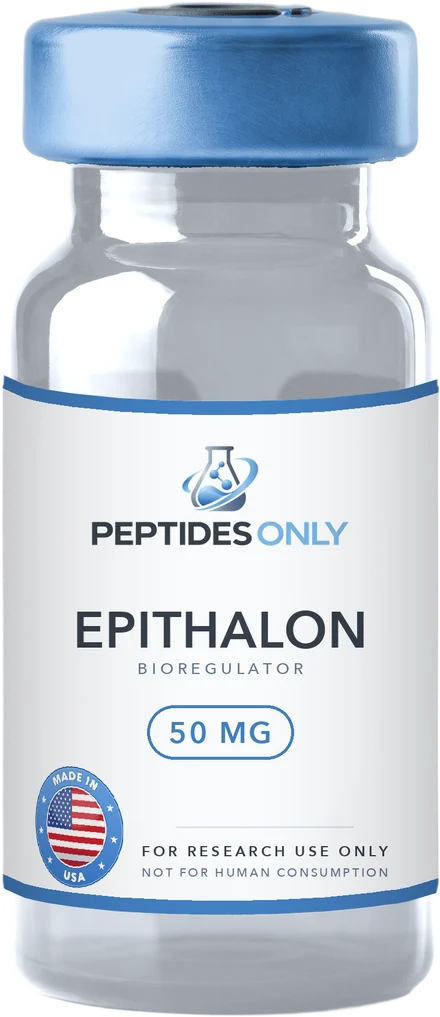
Epithalon
Tetrapeptide studied in telomerase and pineal research.
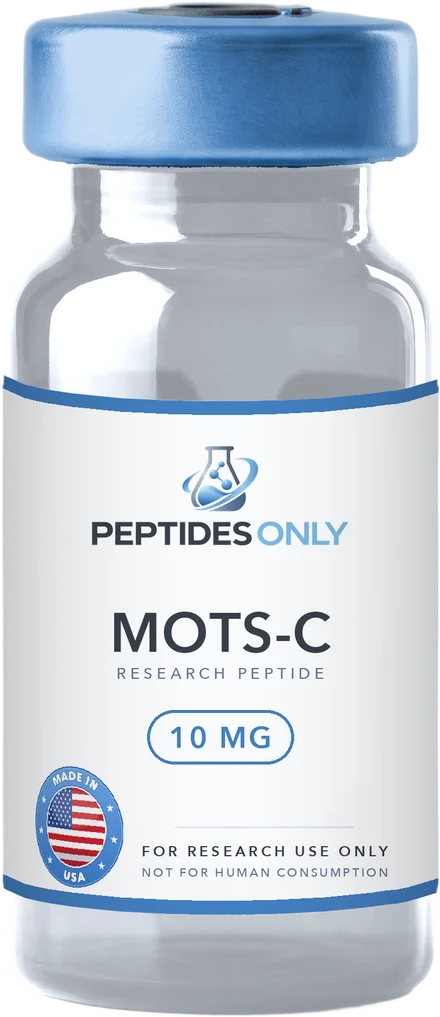
MOTS-c
Mitochondrial-derived peptide studied in metabolic homeostasis.
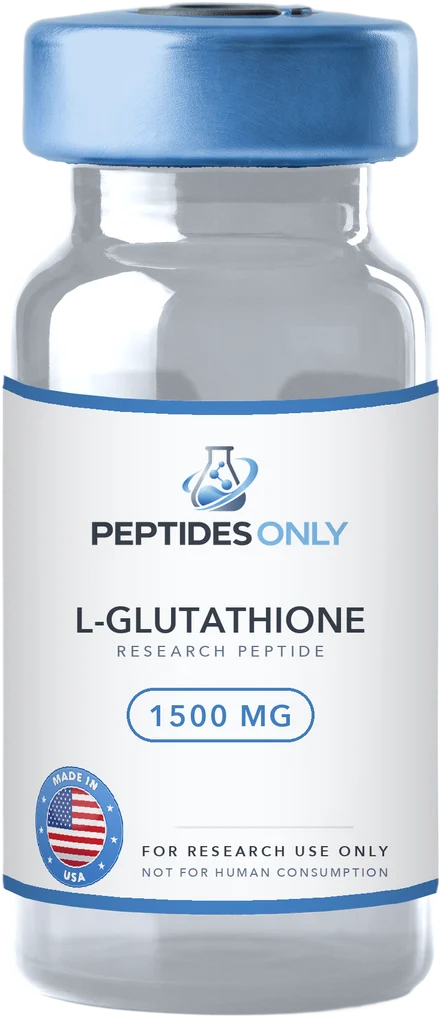
L-Glutathione
Master tripeptide antioxidant for oxidative-stress studies.