Lyophilized vial
BPC-157
Stable gastric pentadecapeptide, a staple of tissue-repair research.
$85.00
2 for $85 · $42.50/vial

Modified GRF (1-29) for pulsatile GH-axis research.
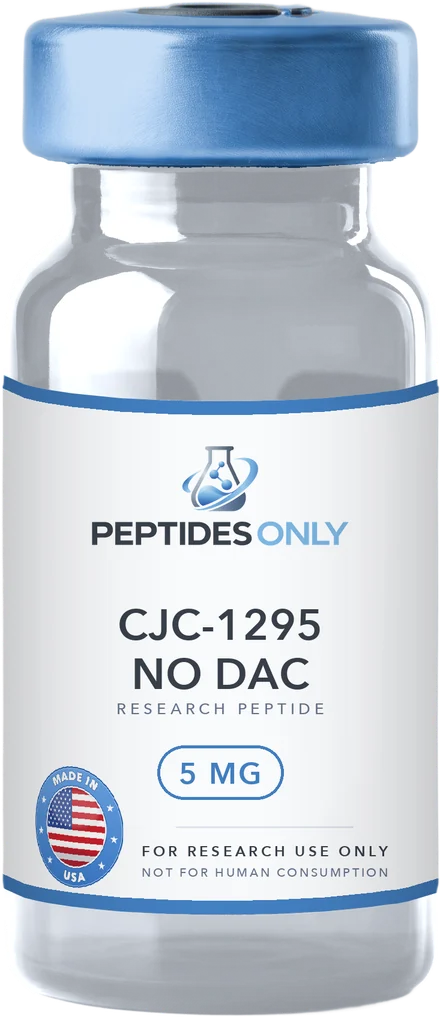
CJC-1295 (No DAC) 5 mg
Your order ships with the certificate for its own lot. 1 earlier certificate for this size in the COA library.
Modified GRF (1-29) for pulsatile GH-axis research.
5 mg per vial, as a lyophilized powder in a sealed glass vial with a crimped cap. The lot number on the label matches the certificate of analysis in the COA library.
Store lyophilized powder frozen (−20 °C) or refrigerated, sealed and away from light. Once reconstituted, keep refrigerated (2–8 °C).
Handle in a laboratory setting using appropriate protective equipment. Consult the certificate of analysis and safety data for lot-specific information.
CJC-1295 without DAC, also sold as Mod GRF (1-29) or modified GRF 1-29, is a 29-amino-acid synthetic analogue of growth hormone-releasing hormone (GHRH) carrying four substitutions that make it more resistant to breakdown than the native sequence. It is the peptide backbone of CJC-1295 minus the albumin-binding drug affinity complex (DAC), so it lacks the multi-day half-life that defines the DAC compound1. It is a laboratory tool for GHRH-receptor and growth hormone (GH) axis research; the published human studies of CJC-1295 used the DAC version2.
Native GHRH was first isolated in 1982 as a 44-amino-acid peptide from a pancreatic tumor that had caused acromegaly3. Its first 29 residues, with a C-terminal amide, are the shortest synthetic fragment that keeps the hormone's full biological activity; that fragment is sermorelin4.
In 2005, researchers at ConjuChem described CJC-1295 as a tetrasubstituted form of human GRF(1-29) with an extra lysine, carrying a maleimidopropionamide group, added at the C terminus1. The product sold as CJC-1295 without DAC (or no DAC) is the tetrasubstituted 29-residue amide on its own, without that lysine linker. When a Norwegian doping-control laboratory analyzed an unidentified preparation seized by police and customs, it found exactly this kind of peptide: a 29-amino-acid amide whose sequence matched the one being marketed as CJC-12955.
Compared with the native human GHRH(1-29) sequence3, CJC-1295 without DAC differs at four positions:
The same design logic runs through earlier GRF-analogue work, in which peptides combining N-terminal, position-8, Ala15 and Leu27 changes were more stable in plasma and several-fold more potent than native GHRH in rat pituitary cells and in pigs6. Those were related analogues rather than this exact sequence, so they explain the rationale; they do not measure this peptide.
Native GHRH is short-lived: after intravenous administration in people, intact GHRH(1-44) had a half-life of about 6.8 minutes7. The DAC version of CJC-1295 addresses this with chemistry rather than sequence. Its reactive lysine bonds to the free thiol of cysteine 34 on serum albumin, and in rats the peptide was still present in plasma beyond 72 hours1. In healthy adults its estimated half-life was 5.8 to 8.1 days2.
CJC-1295 without DAC has none of that albumin-binding chemistry. Its substitutions are designed to slow enzymatic and chemical breakdown, but we found no published study that measured its half-life in people, so half-life figures quoted for it online are not backed by a peer-reviewed measurement. For a full side-by-side, see CJC-1295 with DAC vs without DAC.
CJC-1295 analogues act at the GHRH receptor of the anterior pituitary1, a G protein-coupled receptor expressed predominantly in that gland that signals through cyclic AMP9. That makes the no-DAC peptide a tool for laboratory work on somatotroph signaling, GH release, and how GHRH-receptor stimulation interacts with ghrelin-receptor agonists such as ipamorelin, the pairing supplied in the CJC-1295 + Ipamorelin vial.
Much of the literature that names it is analytical. Anti-doping laboratories have mapped the in vitro metabolism of CJC-1295 and CJC-1295 with DAC, alongside sermorelin and tesamorelin, and built mass-spectrometry methods to detect them, because GHRH and its synthetic analogues are prohibited in sport10. A 2026 clinical review listed both versions among unregulated GH-axis peptides and graded such compounds by strength of evidence, from regulatory-grade trials down to a complete absence of human studies11.
In common usage, yes. Both names describe the tetrasubstituted GHRH(1-29) amide that forms the backbone of CJC-12951, supplied without the lysine-maleimide linker. Modified GRF (1-29) and tetrasubstituted GRF (1-29) are other names for the same peptide.
Drug affinity complex. In CJC-1295 it is a lysine carrying a maleimidopropionamide group, added after residue 29, that bonds covalently to serum albumin and keeps the peptide in circulation far longer1.
Sermorelin is the native GHRH(1-29) amide4. CJC-1295 without DAC is the same length but carries the four substitutions described above, which target DPP-IV cleavage, asparagine rearrangement and methionine oxidation8,6. Our article Ipamorelin vs Sermorelin vs Tesamorelin covers the wider GHRH family.
No. It is not an approved medicine for any use, and GHRH analogues are prohibited by the World Anti-Doping Agency10. Peptides Only supplies it for laboratory research only.
As with most lyophilized peptides, the sealed powder is generally kept cold, dry and protected from light. Our guide to peptide storage and stability covers the principles.
Research summary reviewed 2026-10-26 against the cited literature.
Stable gastric pentadecapeptide, a staple of tissue-repair research.
Copper-binding tripeptide used in collagen and skin-matrix research.
Essential coenzyme for studies of cellular metabolism and ageing.
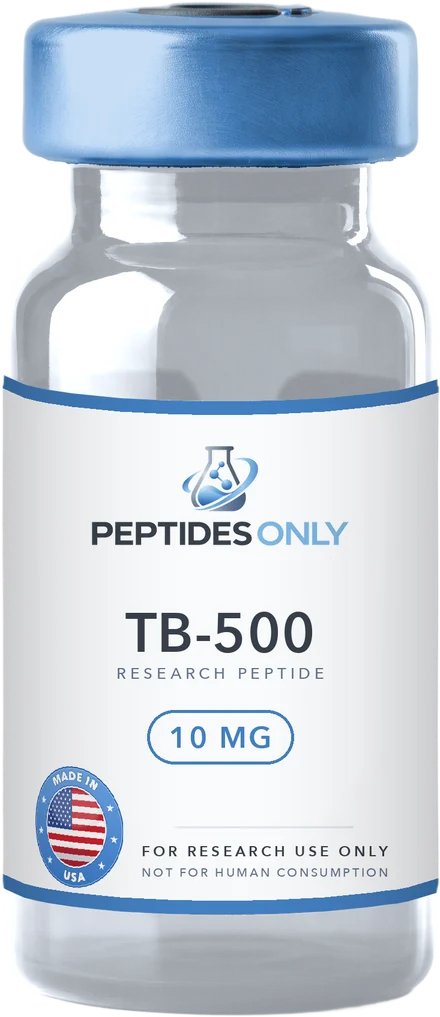
Thymosin beta-4 fragment studied for cell migration and repair.
Operated by DND Wellness LLC · 1309 Coffeen Ave, Suite 1200, Sheridan, WY 82801.
support@peptides-only.com · (508) 404-8124
Use the chat widget to ask a question. Informational and promotional text messages require separate, optional consent. Message frequency varies. Msg & data rates may apply. Reply STOP to unsubscribe or HELP for help. Consent is not a condition of purchase. 21+.
SMS consent & support · SMS terms & Terms of Service · Privacy Policy