
How to Read a Peptide COA: A Field-by-Field Guide
A peptide certificate of analysis (COA) is a laboratory report on one specific lot. It should name the lot, the testing lab and the test date, confirm identity by mass spectrometry, and report purity by HPLC with the chromatogram behind the number. Purity and quantity are separate measurements, so reading a COA well means knowing which line answers which question.
What is a peptide COA?
A certificate of analysis is a testing laboratory's report on a sample from one manufacturing lot. Pharmaceutical quality control evaluates peptides with a series of complementary tests for identity, purity and strength1. A research-grade COA is a shorter version: a header tying the report to a lot, then identity, purity and, on more complete certificates, net peptide content.
A third-party COA comes from a laboratory independent of the seller; an in-house COA comes from the vendor. Either can be accurate, but only a third-party report can be checked with someone who has no stake in the sale. This guide uses a real certificate from the Peptides Only COA library as its worked example: ipamorelin 10 mg, lot VNA7TB, reported on 12 May 2026 by Freedom Diagnostics Testing.
The header: lot number, dates and testing laboratory
The lot (or batch) number connects the paper to the vial, and it should match the vial label character for character. A certificate without one could describe any vial, which means it verifies none of them.
The example header shows the lot, received and reported dates (11 and 12 May 2026), an accession number and search code assigned by the lab, and the lab's website and email. A client field names whoever submitted the sample, often a manufacturer or distributor, and a closing statement says the results are specific to the sample provided, which is exactly why the lot match matters. Check the header for:
- Lot number: identical to the one printed on the vial.
- Testing laboratory: named and contactable.
- Dates: received and reported dates that fit the lot.
- Report identifier: an accession number the lab can look up.
- Product and label claim: the compound and the stated amount per vial.
Identity: how to read the mass spectrum
Mass spectrometry weighs ions rather than molecules and reports every signal as a mass-to-charge ratio (m/z). Peptides are normally ionized by electrospray, which produces intact ions carrying one or more extra protons; a hallmark of electrospray spectra is a family of multiply charged ions from the same molecule2.
Three labels cover most certificates. [M+H]+ is the intact molecule (M) plus one proton, appearing at the molecular weight plus about 1. [M+2H]2+ carries two protons and two charges, appearing near (M + 2) divided by 2. [M+Na]+ is a sodium adduct about 22 Da above [M+H]+. Larger peptides tend toward higher charge states: in a published analysis of melanotan II vials, identity was confirmed by fragmenting the doubly charged [M+2H]2+ ion at m/z 5133.
On the example certificate, ipamorelin (molecular weight about 711.9) shows [M+2H]2+ at m/z 356.6, [M+H]+ at m/z 712.2 and [M+Na]+ at m/z 734.2, each within a few tenths of the predicted value; the small signal at 713.2 is the same ion carrying a naturally occurring carbon-13 atom. To check a certificate yourself, take the molecular weight from the product specification and add 1 for [M+H]+, or add 2 and halve it for [M+2H]2+. Agreement within about 1 Da is normal, since labs may quote monoisotopic or average mass.
Larger gaps mean something. A shift of 16 suggests an added oxygen, and a shortfall equal to one amino acid residue suggests a deletion sequence; both are recognized synthesis-related impurities4. Identity testing also has a blind spot: isomers and epimers have the same mass, so a matching spectrum shows the formula fits, not that every residue has the right configuration1,5.
Purity: what the HPLC chromatogram shows
High-performance liquid chromatography (HPLC), most often in reversed-phase mode, is the standard method for separating and analyzing peptides6. Components separate on a column by hydrophobicity and a UV detector records each as a peak, with retention time in minutes on the x-axis and detector response (usually mAU) on the y-axis. Purity is normally reported as area percent: the main peak's area divided by the total area of all integrated peaks.
The example chromatogram shows one tall, narrow peak labeled ipamorelin at roughly 6.5 minutes on a flat baseline across the rest of the run, reported as 99.90%. Smaller peaks, where present, are usually related impurities. In synthetic peptides these include deletion and insertion sequences, incompletely deprotected side chains, oxidized residues, diastereomers and degradation products such as pyroglutamate and succinimide forms, and such impurities can influence early functional studies enough to produce erroneous conclusions4.
Area percent cannot tell you how much peptide is in the vial, or what else is there that the detector cannot see. In one published case, two commercially sourced custom peptides contained 20% and 43% w/w of undeclared mannitol, a UV-transparent compound of the kind LC-based checks are blind to, which quantitative NMR detected and measured7. A 99% figure describes the chromatogram, not the full contents of the vial.
Net peptide content vs gross weight
A lyophilized peptide is rarely the peptide alone. Peptides with charged side chains exist as salts paired with counter-ions8, and peptides made by solid-phase synthesis, cationic ones in particular, are typically obtained as trifluoroacetate (TFA) salts because trifluoroacetic acid is used in cleavage and purification; exchanging it for a counter-ion such as acetate is a separate step9. The powder also holds residual water. Gross weight is everything in the vial; net peptide content is the mass of the peptide itself.
The difference can be large. In a candidate reference material of angiotensin II, the TFA counter-ion alone accounted for nearly 25% of the mass, and the assigned peptide purity was 691 mg/g10. A mass-balance assignment for synthetic oxytocin, which subtracted related impurities, water, counter-ions, inorganic elements and residual solvents, arrived at 796.5 mg/g11. Content can be measured by HPLC assay against a characterized standard, quantitative NMR or amino acid analysis, so the method should be stated1,10.
The counter-ion also matters in cell work: TFA at 10 to 100 nM reduced cell numbers in fetal rat osteoblast cultures, and the TFA salts of several peptides produced misleading results compared with their hydrochloride salts12. The example ipamorelin certificate reports a net content of 13.12 mg against a 10 mg label claim. Net content, not label weight, is the figure that says how much peptide the vial actually holds.
Endotoxin, sterility and heavy metals
HPLC and mass spectrometry cannot see bacterial endotoxin, live microorganisms or trace metals; each needs its own test. Endotoxin is measured with the Limulus amebocyte lysate (LAL) assay, which became established in pharmaceutical quality control as an alternative to the rabbit pyrogen test13. It matters in experiments: proinflammatory effects once attributed to a recombinant C-reactive protein preparation were shown to be consistent with bacterial contamination, with 46.6 EU of endotoxin activity per mg against 0.9 EU/mg in purified natural protein14.
Heavy metals such as lead, arsenic, cadmium and mercury are measured by inductively coupled plasma mass spectrometry (ICP-MS), valued among elemental-impurity techniques for its sensitivity at trace levels15. Where these tests appear, look for numeric results (EU/mg for endotoxin, µg/g or ppm for metals), the method and the limit applied; a bare "pass" tells you little. The example certificate covers identity, purity and net content; the other tests are separate analyses, reported as separate lines or documents where run.
Red flags on a peptide COA
Independent testing of peptide products bought online shows why these checks matter: melanotan II vials from three web shops, each claimed to hold 10 mg, contained between 4.32 and 8.84 mg3. Most reused or fabricated certificates fail on basics. Watch for:
- No lot number, or a lot number that does not match the vial label.
- No named laboratory, or a lab with no website, address or contact details.
- A purity figure with no chromatogram, or a chromatogram with no axes, retention times or peak labels.
- An identity result of "confirmed" with no spectrum and no m/z values.
- An observed mass that misses the expected ion by more than about 1 Da.
- The same purity, chromatogram or dates on every lot; genuine results vary slightly from lot to lot.
- Signs of editing: mismatched fonts, misaligned fields, text sitting over other text, or dates that contradict the lot.
How to verify a COA with the issuing lab
Find the laboratory independently, by searching its name rather than following a link in the PDF, and check that it is a real analytical lab with contact details. Then use the report identifiers: the example certificate gives an accession number, a search code and the lab's website. Where a lab offers no online lookup, email it the accession number, lot, product and report date and ask it to confirm the result. A genuine laboratory can tell you whether it issued a report.
It is also fair to ask what the lab is accredited for (ISO/IEC 17025 is the general standard for testing-laboratory competence). For Peptides Only lots, the COA library has a lookup for the lot number printed on your vial, and the quality standard page explains what each check is for. If you are comparing vendors, the supplier checklist puts these questions in order.
Frequently asked questions
What should a peptide certificate of analysis include?
At minimum: the lot number, the testing laboratory, the report date, identity by mass spectrometry with the observed ions, and purity by HPLC with the chromatogram. Net peptide content, and endotoxin or heavy-metal results where tested, add what a purity number cannot.
Does 99% purity mean the vial is 99% peptide?
No. HPLC area-percent purity is the share of the UV-detected signal that belongs to the target peptide. Counter-ions, water and UV-transparent substances are not counted: in an angiotensin II reference material the TFA counter-ion alone was nearly a quarter of the mass10, and undeclared mannitol has been found at up to 43% w/w in commercially sourced custom peptides7.
What does [M+H]+ mean on a COA?
It is the intact molecule plus one proton, a singly charged ion appearing at about the molecular weight plus 1. [M+2H]2+ carries two protons and appears near half of the molecular weight plus 2; electrospray commonly produces such multiply charged series2.
TFA vs acetate peptide salt: what is the difference?
Both are counter-ions paired with the peptide's charged groups. Solid-phase synthesis and purification usually leave cationic peptides as TFA salts, and exchanging TFA for a counter-ion such as acetate is an extra processing step9. The difference matters in cell studies, where TFA itself reduced osteoblast cell numbers at nanomolar concentrations12.
How can I tell if a peptide COA is fake?
Check that the lot matches your vial, the lab is real and reachable, the chromatogram and spectrum are present with readable values, the observed mass fits the sequence, and results change between lots. Then ask the lab to confirm the accession number; if it cannot find the report, the certificate is unverified.
References
- McCarthy D, Han Y, et al. Reference Standards to Support Quality of Synthetic Peptide Therapeutics. Pharm Res. 2023;40(6):1317-1328. PubMed 36949371
- Fenn JB, Mann M, et al. Electrospray ionization for mass spectrometry of large biomolecules. Science. 1989;246(4926):64-71. PubMed 2675315
- Breindahl T, Evans-Brown M, et al. Identification and characterization by LC-UV-MS/MS of melanotan II skin-tanning products sold illegally on the Internet. Drug Test Anal. 2015;7(2):164-72. PubMed 24771717
- D'Hondt M, Bracke N, et al. Related impurities in peptide medicines. J Pharm Biomed Anal. 2014;101:2-30. PubMed 25044089
- Lian Z, Wang N, et al. Characterization of Synthetic Peptide Therapeutics Using Liquid Chromatography-Mass Spectrometry: Challenges, Solutions, Pitfalls, and Future Perspectives. J Am Soc Mass Spectrom. 2021;32(8):1852-1860. PubMed 34110145
- Mant CT, Chen Y, et al. HPLC analysis and purification of peptides. Methods Mol Biol. 2007;386:3-55. PubMed 18604941
- Choules MP, Bisson J, et al. NMR reveals an undeclared constituent in custom synthetic peptides. J Pharm Biomed Anal. 2020;178:112915. PubMed 31671336
- Sikora K, Jaśkiewicz M, et al. The Role of Counter-Ions in Peptides-An Overview. Pharmaceuticals (Basel). 2020;13(12):442. PubMed 33287352
- Roux S, Zékri E, et al. Elimination and exchange of trifluoroacetate counter-ion from cationic peptides: a critical evaluation of different approaches. J Pept Sci. 2008;14(3):354-9. PubMed 18035848
- Melanson JE, Thibeault MP, et al. Purity assignment for peptide certified reference materials by combining qNMR and LC-MS/MS amino acid analysis results: application to angiotensin II. Anal Bioanal Chem. 2018;410(26):6719-6731. PubMed 30143839
- Wang S, Wu P, et al. Mass balance method for SI-traceable purity assignment of synthetic oxytocin. J Pharm Biomed Anal. 2022;207:114401. PubMed 34656934
- Cornish J, Callon KE, et al. Trifluoroacetate, a contaminant in purified proteins, inhibits proliferation of osteoblasts and chondrocytes. Am J Physiol. 1999;277(5):E779-83. PubMed 10567002
- Tamura H, Reich J, et al. Outstanding Contributions of LAL Technology to Pharmaceutical and Medical Science: Review of Methods, Progress, Challenges, and Future Perspectives in Early Detection and Management of Bacterial Infections and Invasive Fungal Diseases. Biomedicines. 2021;9(5):536. PubMed 34064994
- Pepys MB, Hawkins PN, et al. Proinflammatory effects of bacterial recombinant human C-reactive protein are caused by contamination with bacterial products, not by C-reactive protein itself. Circ Res. 2005;97(11):e97-103. PubMed 16254214
- Galdino JNS, César IDC. Comparison of Analytical Methods for the Determination of Elemental Impurities in Pharmaceutical Products. Crit Rev Anal Chem. 2026:1-13. PubMed 41848101
Compounds discussed
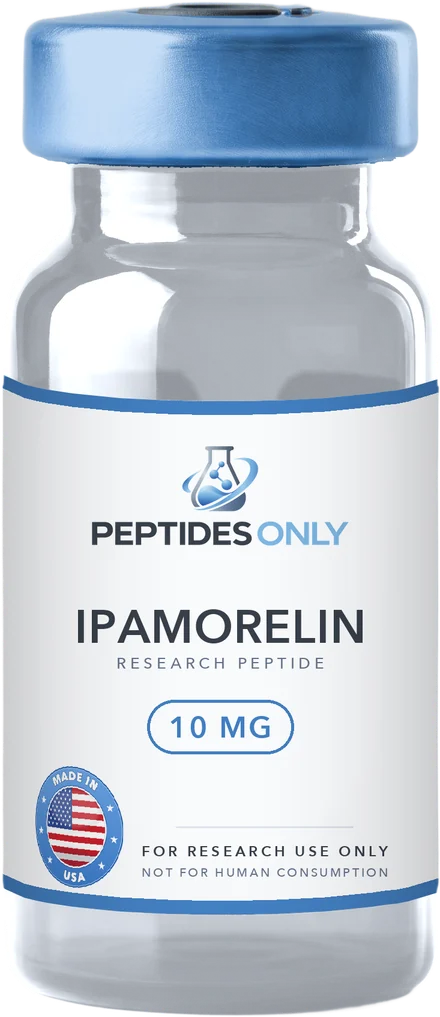
Ipamorelin
Selective ghrelin-receptor agonist for GH-release research.
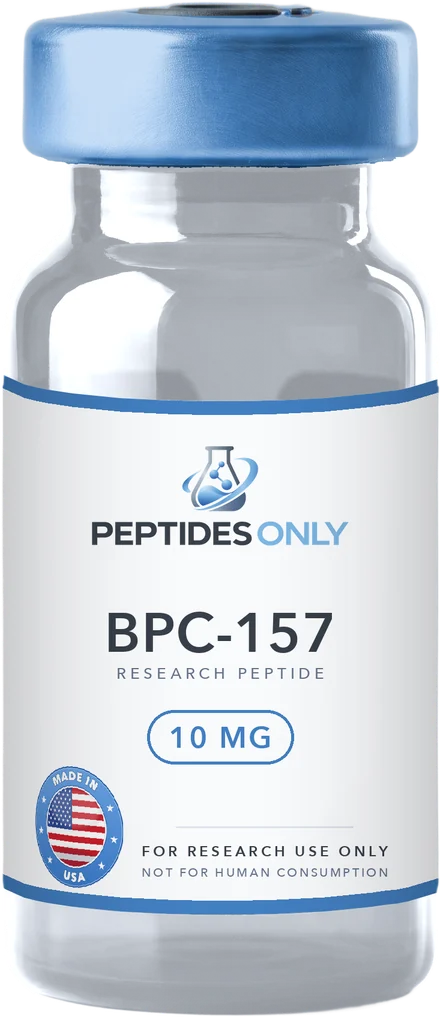
BPC-157
Stable gastric pentadecapeptide, a staple of tissue-repair research.
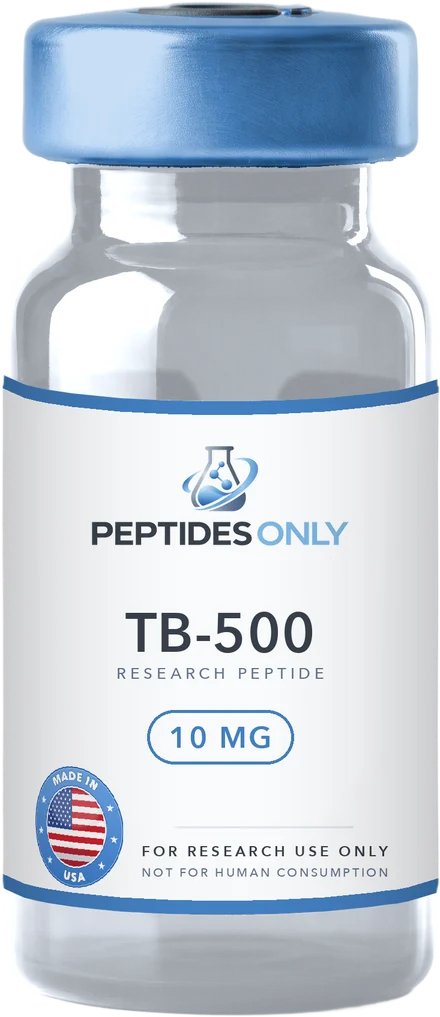
TB-500
Thymosin beta-4 fragment studied for cell migration and repair.