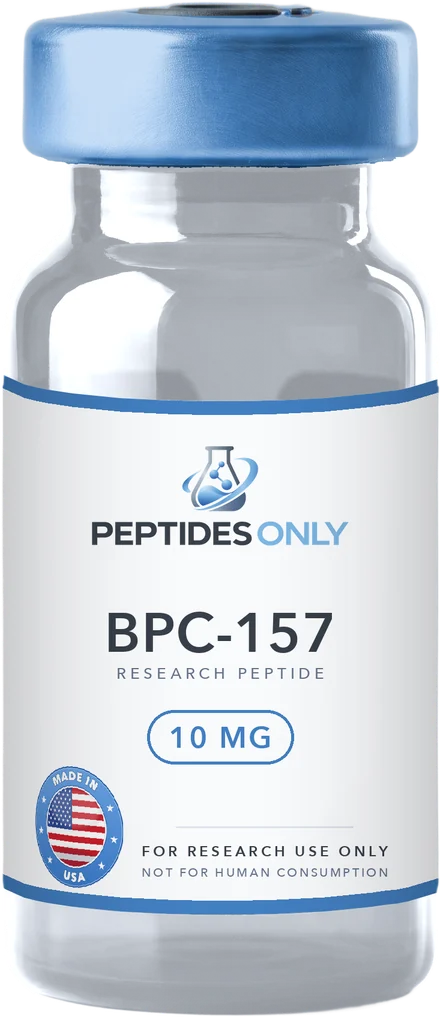
Lyophilized vial
BPC-157
Stable gastric pentadecapeptide, a staple of tissue-repair research.
$85.00
2 for $85 · $42.50/vial

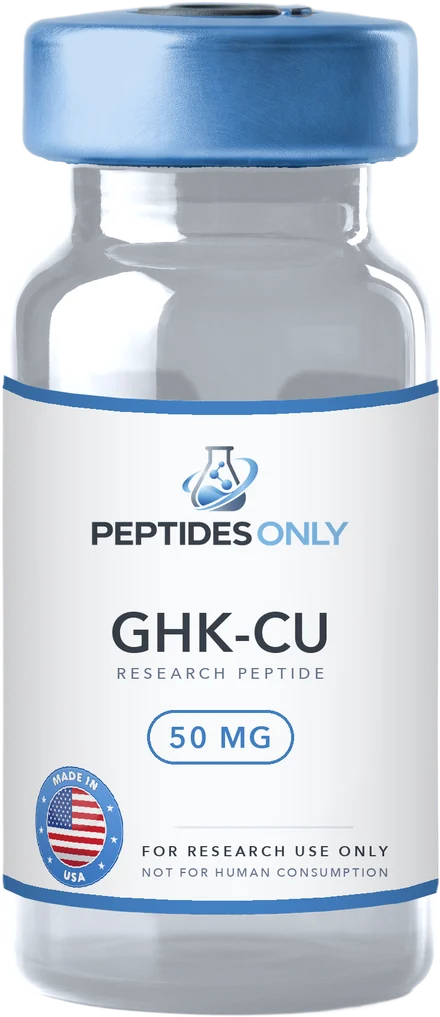
Copper-binding tripeptide used in collagen and skin-matrix research.
GHK-Cu 50 mg
Your order ships with the certificate for its own lot. 1 earlier certificate for this size in the COA library.
Copper-binding tripeptide used in collagen and skin-matrix research.
50 mg per vial, as a lyophilized powder in a sealed glass vial with a crimped cap. The lot number on the label matches the certificate of analysis in the COA library.
Store lyophilized powder frozen (−20 °C) or refrigerated, sealed and away from light. Once reconstituted, keep refrigerated (2–8 °C).
Handle in a laboratory setting using appropriate protective equipment. Consult the certificate of analysis and safety data for lot-specific information.
GHK-Cu is the copper(II) complex of GHK (glycyl-L-histidyl-L-lysine), a three-amino-acid peptide first isolated from human plasma by Loren Pickart in the 1970s. It is one of the most-studied peptides in skin-matrix research: cell-culture and rodent studies have measured its effects on collagen and glycosaminoglycan synthesis, matrix metalloproteinases and gene expression, while controlled clinical evidence remains sparse. Peptides Only supplies GHK-Cu as a lyophilized compound for laboratory research only.
GHK (Gly-His-Lys) was first reported in 1973 as a factor in human serum that prolonged the survival of normal liver cells and stimulated the growth of neoplastic liver cells1. In 1980 Pickart's group found that the tripeptide co-isolates with roughly equimolar copper, readily forms a complex with copper(II) and increases copper uptake into cultured hepatoma cells. They noted its resemblance to the copper-transport site of albumin, where copper binds a histidine next to a basic residue2. That copper complex, GHK-Cu, is the form most later studies used.
GHK is present in human plasma, saliva and urine, and Pickart's group reports that plasma levels decline with age3. A Gly-His-Lys triplet also occurs within the alpha-2 chain of type I collagen, which led researchers to propose that the tripeptide may be released by proteases at sites of tissue injury4.
The work that made GHK-Cu a skin-matrix compound began in fibroblast cultures. Maquart and colleagues reported in 1988 that GHK-Cu stimulated collagen synthesis starting at picomolar concentrations and peaking near one nanomolar, without any change in cell number4.
The same group then moved to rats, using implanted wire-mesh wound chambers. Chambers that received GHK-Cu accumulated more dry weight, DNA, total protein, collagen and glycosaminoglycans than saline controls, in a concentration-dependent pattern. Type I and type III collagen mRNAs rose while TGF-beta mRNA did not, and a control tripeptide had no significant effect5.
Later work in the same model looked at matrix breakdown as well as synthesis. GHK-Cu raised pro- and active matrix metalloproteinase-2 (MMP-2) in the later stages of repair and prolonged MMP-9 expression in wound tissue, which the authors concluded might significantly alter wound remodeling6.
In 2012 a Boston University team profiled lung tissue from smokers with COPD and searched the Connectivity Map, a database of compound-induced gene-expression profiles, for molecules that oppose the emphysema-severity signature. GHK was one of them, and in cultured lung fibroblasts from COPD patients it restored collagen I gel contraction and remodeling7. This is a computational and cell-culture finding, not a clinical one.
Outside the skin, a randomized rat study of anterior cruciate ligament reconstruction found a smaller side-to-side difference in knee laxity and, in one group, higher graft stiffness with GHK-Cu at 6 weeks, but no differences at 12 weeks and none in ultimate load, gait or histology, so the effect was transient8.
Topical penetration has also been measured directly. In diffusion cells mounted with human skin, copper applied as GHK-Cu crossed dermatomed skin and part of it was retained in the tissue as a depot9. Studies like this show where the copper goes; they do not measure biological effects.
GHK-Cu is highly hydrophilic. In a preformulation study it was vulnerable to hydrolytic cleavage under basic and oxidative stress and, to a lesser extent, under acid; histidine was one of three degradation products identified. In water and in pH 4.5 to 7.4 buffers, however, it remained stable for at least two weeks at 60 °C12. General guidance for lyophilized material is in our article on peptide storage and stability.
Peptides Only supplies GHK-Cu as a lyophilized powder for laboratory research. Every lot ships from the USA with a lot-matched certificate of analysis from an independent laboratory, reporting HPLC purity and mass-spectrometry identity, and the certificates are published in our COA library. GHK-Cu is also a component of GLOW Blend and KLOW Blend; how those blends differ is set out in GLOW vs KLOW vs Wolverine.
No. GHK-Cu is not an FDA-approved drug. It appears in cosmetic products, but a 2026 review concluded that it should be regarded as a promising but unproven therapeutic agent until controlled clinical efficacy is demonstrated11. Peptides Only sells it for laboratory research only.
GHK is the free tripeptide Gly-His-Lys; GHK-Cu is its complex with a copper(II) ion. Early work showed that GHK binds copper(II) and increases its uptake into cells2, and the classic collagen studies used the copper complex4,5. Recent reviewers recommend that papers state clearly which form was tested11.
No. AHK-Cu (alanyl-histidyl-lysine copper) and other copper peptides are different molecules, and results for one should not be assumed for another. A 2026 review separates GHK-Cu from GHK-derived and non-GHK copper-peptide systems for exactly this reason11.
Like most lyophilized peptides, sealed, dry, cold and protected from light. Stability in solution is a separate question: GHK-Cu degrades faster under basic or oxidizing conditions12. Our storage guide covers the general principles.
Both blends contain GHK-Cu, BPC-157 and TB-500; KLOW adds a fourth peptide, KPV. Neither has been studied as a mixture. The article GLOW vs KLOW vs Wolverine compares them component by component.
Research summary reviewed 2026-10-26 against the cited literature.
Stable gastric pentadecapeptide, a staple of tissue-repair research.
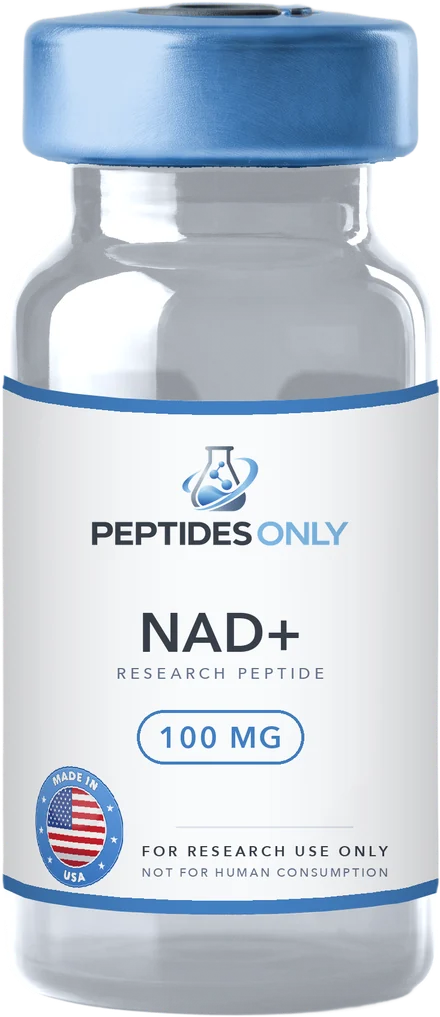
Essential coenzyme for studies of cellular metabolism and ageing.
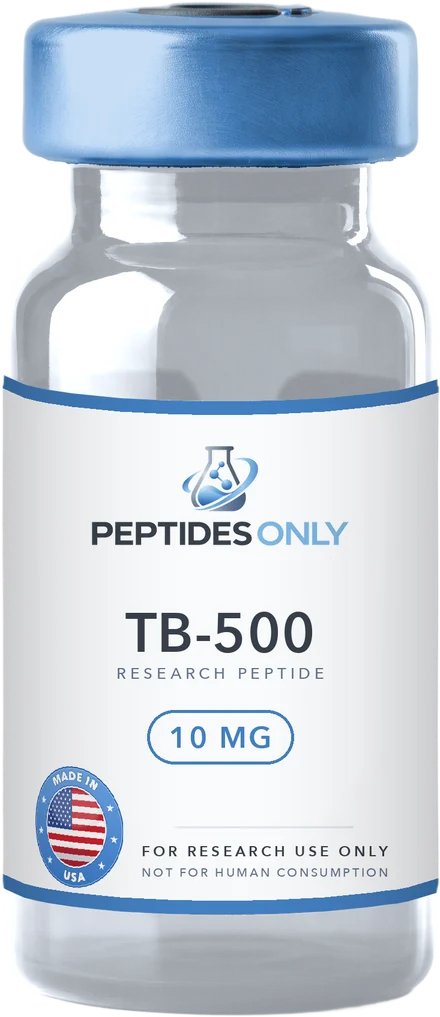
Thymosin beta-4 fragment studied for cell migration and repair.
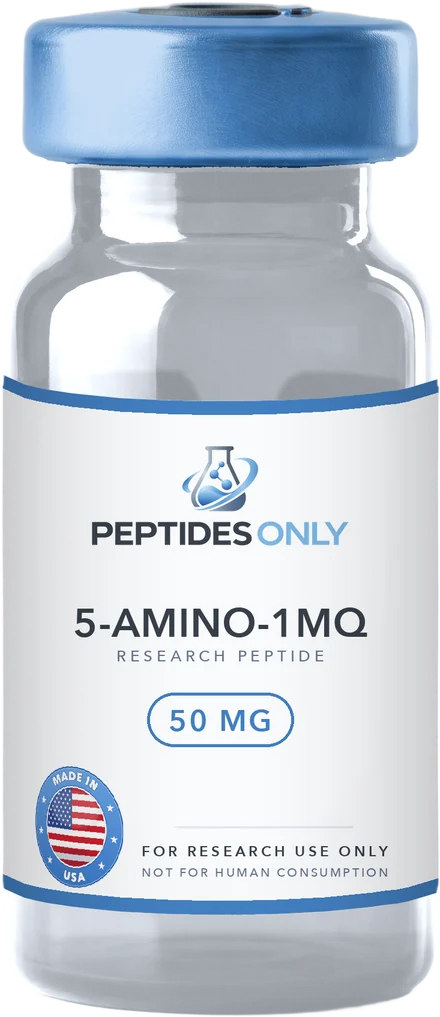
Small-molecule NNMT inhibitor studied in cellular energy research.
Operated by DND Wellness LLC · 1309 Coffeen Ave, Suite 1200, Sheridan, WY 82801.
support@peptides-only.com · (508) 404-8124
Use the chat widget to ask a question. Informational and promotional text messages require separate, optional consent. Message frequency varies. Msg & data rates may apply. Reply STOP to unsubscribe or HELP for help. Consent is not a condition of purchase. 21+.
SMS consent & support · SMS terms & Terms of Service · Privacy Policy