Lyophilized vial
BPC-157
Stable gastric pentadecapeptide, a staple of tissue-repair research.
$85.00
2 for $85 · $42.50/vial

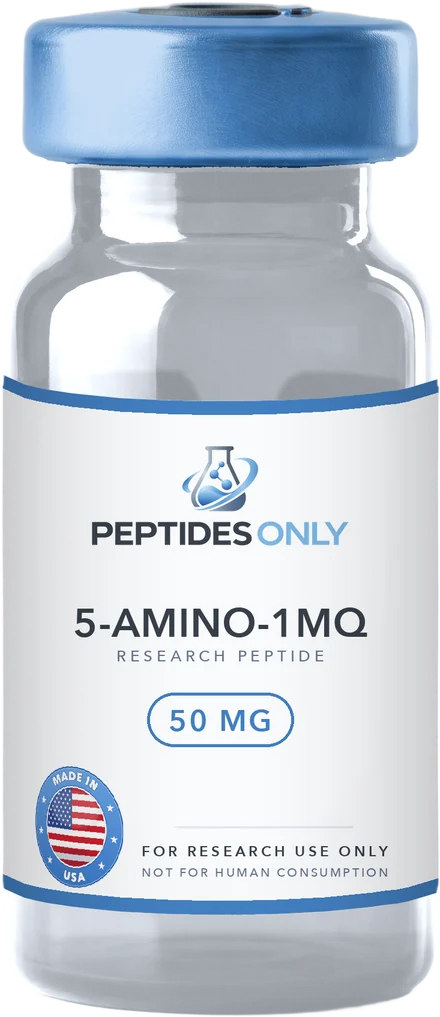
Small-molecule NNMT inhibitor studied in cellular energy research.
5-Amino-1MQ 50 mg
Your order ships with the certificate for its own lot. 2 earlier certificates for this size in the COA library.
Small-molecule NNMT inhibitor studied in cellular energy research.
50 mg per vial, as a lyophilized powder in a sealed glass vial with a crimped cap. The lot number on the label matches the certificate of analysis in the COA library.
Store lyophilized powder frozen (−20 °C) or refrigerated, sealed and away from light. Once reconstituted, keep refrigerated (2–8 °C).
Handle in a laboratory setting using appropriate protective equipment. Consult the certificate of analysis and safety data for lot-specific information.
5-Amino-1MQ (5-amino-1-methylquinolinium) is a small-molecule inhibitor of nicotinamide N-methyltransferase (NNMT), the enzyme that methylates nicotinamide using S-adenosylmethionine (SAM) and so links NAD+ metabolism with the cell's methylation balance1. It is not a peptide. The studies that name it were carried out in cultured cells and mice2,3,4,5, and Peptides Only supplies it, as the iodide salt, for laboratory research only.
5-Amino-1MQ is a small organic molecule: a quinoline ring with an amino group at position 5 and a methyl group on the ring nitrogen, which gives it a permanent positive charge. It is supplied as the iodide salt, and papers abbreviate it as 5A1MQ or 5MQ2,4.
It comes out of a medicinal-chemistry program on NNMT inhibitors. A 2017 structure–activity study of N-methylated quinolinium and related heterocycles identified quinoliniums as a promising scaffold, with low-micromolar NNMT inhibition and predicted binding in the enzyme's nicotinamide site6. A 2018 follow-up reported that methylquinolinium analogues carrying primary amine substitutions, the class 5-amino-1MQ belongs to, crossed membranes readily and did not inhibit related SAM-dependent methyltransferases or NAD+ salvage-pathway enzymes7. Neither abstract names individual compounds, so these are findings about the series.
NNMT transfers a methyl group from SAM, the universal methyl donor, to nicotinamide, a form of vitamin B3 and an NAD+ precursor. That places it at the junction of one-carbon metabolism, the cell's methylation balance and NAD+ levels1. Its expression is tissue-specific: in adipose tissue it correlates with obesity and insulin resistance, and it is raised in a variety of cancers1.
In a 2014 mouse study, NNMT expression was raised in the adipose tissue and liver of obese and diabetic mice, and knocking it down in those tissues protected against diet-induced obesity by increasing energy expenditure, with higher adipose SAM and NAD+ and increased polyamine flux8. In people, adipose NNMT expression was about twofold higher in patients with type 2 diabetes than in controls, and plasma 1-methylnicotinamide, the product of the reaction, correlated with adipose NNMT expression in those patients9.
In diet-induced obese (DIO) mice, Babula and colleagues compared 5A1MQ with vehicle over 28 days. Treated mice gained less body weight and fat mass, showed better oral glucose tolerance and insulin sensitivity, and had less fatty liver, including lower liver triglycerides; the compound reached high systemic exposure and distributed to adipose tissue, muscle and liver2. In a separate study, DIO mice switched to a low-fat diet and given 5-amino-1-methylquinolinium returned to the adiposity and body weight of age-matched lean mice, which the diet switch alone did not achieve in the same time frame, and developed a distinct cecal microbiome3. Earlier work on the series reported that NNMT inhibitors lowered intracellular 1-methylnicotinamide, raised NAD+ and SAM and suppressed lipogenesis in cultured adipocytes, and that a potent inhibitor reduced body weight and white adipose mass in DIO mice without changing food intake7.
Aged muscle is a second line of work. The same research group reported that a small-molecule NNMT inhibitor increased muscle stem cell proliferation and fusion after injury in 24-month-old mice, producing larger regenerating fibers and about 70% higher peak torque than controls, and promoted differentiation of C2C12 myoblasts in culture10. In mice followed from 22 to 24 months of age, NNMT inhibitor treatment was associated with about 40% greater grip strength than in sedentary controls, an effect additive with exercise11. Neither abstract names the compound.
Other groups have used 5-amino-1MQ as a tool to inhibit NNMT in cancer biology. In HeLa cervical cancer cells it reduced proliferation in a concentration- and time-dependent manner, with morphological signs of apoptosis and lower phospho-Akt and SIRT1, without apparently affecting the proliferation of HEK-293 cells4. In mouse models of urothelial bladder cancer, where NNMT in cancer-associated fibroblasts was linked to tumor progression, the iodide salt reduced tumor growth and enhanced the apoptotic effect of an anti-PD-L1 antibody5.
5-Amino-1MQ is supplied as a lyophilized iodide salt. The specifications list molecular weights for both the cation and the salt; the difference matters whenever a mass is converted to a molar concentration.
Every Peptides Only lot ships from the USA with a lot-matched certificate of analysis from an independent lab, reporting HPLC purity and mass-spec identity. Certificates are published in the COA library.
No. It is a small-molecule methylquinolinium compound, not a chain of amino acids. It is listed with research peptides because it is used in related metabolic research, alongside MOTS-c and SS-31. Our overview of what research peptides are explains the category.
Nicotinamide N-methyltransferase (NNMT), the enzyme that methylates nicotinamide using SAM1; the reaction product is 1-methylnicotinamide9. In cultured adipocytes, inhibitors from the same chemical series lowered 1-methylnicotinamide and raised NAD+ and SAM7.
NAD+ is the coenzyme itself. 5-Amino-1MQ is an enzyme inhibitor: it blocks NNMT, which consumes SAM and the NAD+ precursor nicotinamide1. Cell studies of NNMT inhibitors report higher intracellular NAD+ as one downstream effect7, but the two compounds are chemically and functionally different.
Not in the studies cited here, all of which used cultured cells or mice2,3,4,5. The human NNMT study cited here measured enzyme expression in fat tissue and the reaction product in blood; it did not test an inhibitor9.
No. It is sold strictly as a research chemical for laboratory use. Identity and purity are documented on the lot-matched certificate of analysis; our guide on how to read a peptide COA explains each field.
Research summary reviewed 2026-10-26 against the cited literature.
Stable gastric pentadecapeptide, a staple of tissue-repair research.
Copper-binding tripeptide used in collagen and skin-matrix research.
Essential coenzyme for studies of cellular metabolism and ageing.
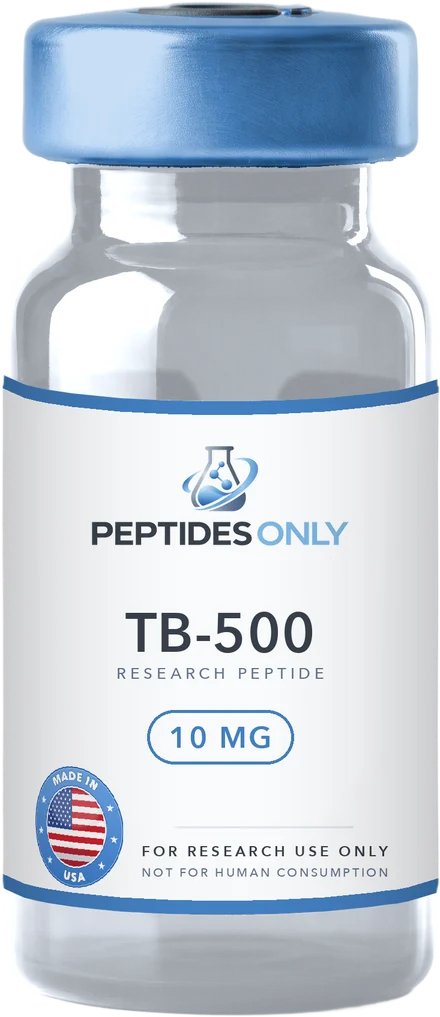
Thymosin beta-4 fragment studied for cell migration and repair.
Operated by DND Wellness LLC · 1309 Coffeen Ave, Suite 1200, Sheridan, WY 82801.
support@peptides-only.com · (508) 404-8124
Use the chat widget to ask a question. Informational and promotional text messages require separate, optional consent. Message frequency varies. Msg & data rates may apply. Reply STOP to unsubscribe or HELP for help. Consent is not a condition of purchase. 21+.
SMS consent & support · SMS terms & Terms of Service · Privacy Policy