
How to Choose a Research Peptide Supplier: A Vetting Checklist
The best research peptide supplier is the one whose claims you can check before you buy: lot-matched certificates from a named, independent laboratory showing identity by mass spectrometry, purity by HPLC and net content, published openly; research-use-only terms with no human-use advice; and the ordinary signs of a real business, such as a US contact, a returns policy and careful storage. Published analyses of peptides bought online have found wrong compounds, short fills and contaminants, so verifiable documentation is what separates one vendor from another.
Why supplier choice matters for research
Research peptides are not sold as approved medicines, so a vendor's own testing and documentation do the job that regulatory quality systems do for drugs. Laboratories that analyze falsified and illegally traded peptide products describe the failure modes plainly: the wrong active ingredient, the wrong amount or none at all, plus toxic contaminants and process-related impurities1.
The published numbers are not reassuring. Melanotan II vials bought from three online shops, each labeled 10 mg, contained 4.32 to 8.84 mg, and vials from two of the shops carried 4.1 to 5.9% unknown impurities2. Every somatropin sample bought from internet vendors held significantly less hormone than labeled3. A systematic screen of the ten falsified peptide drugs most often found on the Belgian market reported widely varying content, purity between 5% and 75% for cysteine-containing peptides, and arsenic and lead, with some samples at up to ten times the ICH limit for parenteral drugs4.
Those studies examined illicit products rather than every vendor, but they describe exactly what good documentation is meant to rule out, and research-grade material is not automatically exempt. Two custom synthetic peptides bought from a commercial source contained 20% and 43% w/w undeclared mannitol, and the authors concluded that experimental verification has to take precedence over trust5. Impurities matter scientifically as well, because they can distort early functional studies and lead to erroneous conclusions6.
Lot-matched, third-party COAs, published before you buy
The most useful single filter is whether a supplier publishes its certificates of analysis openly, before you order, with a lot number on each certificate that matches the vial label. A certificate shown only after purchase, or one generic PDF that never changes, cannot help you choose. Third-party means the testing lab is independent of the seller; that does not guarantee accuracy, but it gives you someone to verify the result with.
Look for three separate results. Identity by mass spectrometry shows the molecule is the one on the label, and this is not a formality: an official control laboratory identified epidermal growth factor in a preparation suspected to contain IGF-17, and a published screening method for such laboratories identifies unknown peptide products by LC-MS/MS with a minimum of five identification points8. Purity by HPLC, shown with its chromatogram, gives the share of detected material that is the target peptide. Net peptide content shows how much peptide is actually in the vial, which purity alone cannot. Our guide on how to read a peptide COA explains each line.
Then check the laboratory. It should be named on the certificate, findable independently, and able to confirm from the accession or report number that it issued the report. A supplier that cannot say which lab tested a lot, or that discourages you from contacting it, has given you a document rather than evidence.
Beyond purity: endotoxin, sterility and heavy metals
HPLC and mass spectrometry do not detect bacterial endotoxin, microorganisms or heavy metals; each needs its own analysis, and each can matter to an experiment. In the Belgian screen of falsified peptide drugs, the arsenic found was entirely in its more toxic inorganic form, and one sample was contaminated with lead4. Endotoxin can produce effects that look like biology: proinflammatory activity attributed to a recombinant C-reactive protein preparation was attributed to bacterial contamination rather than to the protein itself9.
Ask whether these tests are run, on which lots, and whether you can see the numeric results, methods and limits. A supplier that runs them should be able to show numbers; a bare "pass" is not a result.
Research use only, and why human-use advice is a red flag
Research use only (RUO) means a product is sold for laboratory research and not for use in people or animals. A supplier that takes that label seriously behaves accordingly: it describes compounds in terms of published research, sells under terms that restrict use to research, and does not tell customers how to use the product on themselves. If you are new to the category, our overview of what research peptides are covers the basics.
That is why human dosing advice from an RUO vendor is a red flag rather than a convenience. Charts of amounts and schedules, guidance on routes of administration, personal transformation photos and health claims all contradict the vendor's own terms. They show that the research-use label is a formality to that business, and a company that regards its own terms as a formality has given you little reason to trust its testing. They also mean the product is being marketed for a purpose it was never documented for.
Regulators see the same pattern from the other side. A Belgian official control laboratory identified research peptides in seized preparations and noted that such peptides are freely sold online, including as nasal sprays10. A five-year market surveillance study of SARMs, metabolic modulators and growth hormone secretagogues found that 24% of seized products were presented as dietary supplements11. When the label says one thing and the marketing says another, that mismatch is a warning sign in itself.
Contact, returns, checkout, labels and storage
Ordinary business signals are part of quality. A supplier should give a real contact route in the United States, answer documentation questions, publish a written returns and refund policy, and take payment through a secure, encrypted checkout. Vial labels should carry lot numbers that match the published certificates, so a COA can be traced to the box in front of you.
Storage and shipping deserve a question too. Lyophilized peptides are not inert: in a lyophilized model hexapeptide, residual moisture and temperature significantly affected solid-state chemical degradation12. A study of somatropin bought online assessed delivery times, storage conditions and packaging, and concluded that unprofessional distribution and handling is likely to cause degradation3. Ask how stock is held before dispatch and how it travels; our guide to peptide storage and stability covers what happens after it arrives.
A research peptide supplier checklist
Use this as a quick screen. A supplier does not need to be perfect on every line, but it should be able to answer each one.
| Check | What good looks like | Red flag |
|---|---|---|
| Certificates | Lot-specific COAs published before purchase | COA only on request, or one PDF for every lot |
| Identity | Mass spectrometry with the observed ions shown | "Identity confirmed" with no spectrum |
| Purity | HPLC area percent with the chromatogram | A purity figure with no chromatogram |
| Content | Net peptide content measured for the lot | No content information at all |
| Laboratory | Named, independent and able to confirm its reports | Unnamed lab, or one you cannot contact |
| Other testing | Endotoxin, sterility and metals with values and limits | "Pass" with no value or method |
| Positioning | Research-use-only terms and research framing | Human-use advice or health claims |
| Labels | Lot number on the vial matching the COA | No lot number on the vial |
| Business | US contact, returns policy, secure checkout | No address, no policy, unusual payment requests |
| Storage | Cold storage and a stated shipping approach | No information on storage or shipping |
How Peptides Only handles these checks
Verification beats trust, so here is what can be checked on this site. Every Peptides Only lot ships with a lot-matched certificate of analysis from an independent laboratory, reporting HPLC purity and mass-spectrometry identity. Certificates are published in the public COA library, with a lookup for the lot number printed on your vial, and the quality standard page explains what each check is for. Orders ship from the USA.
Products are sold for laboratory research only under the research use policy, which states that Peptides Only gives no guidance on human use or administration. If a vial does not match its certificate, contact support with the lot number. To browse the catalog, start with research peptides.
Frequently asked questions
Where can I buy research peptides with verified COAs?
Look for a supplier that publishes lot-specific certificates from a named, independent laboratory before you order, with identity by mass spectrometry and purity by HPLC, and that sells under research-use-only terms. Peptides Only publishes its lot-matched certificates in a public COA library.
How can you tell if research peptides are real?
Only analysis can say for certain. A lot-matched certificate showing the expected mass by mass spectrometry is the first check, because published screens have found the wrong compound in a preparation7 and vials holding well under their labeled amount2. For critical work, some researchers also send a sample to an independent laboratory themselves.
What does research use only mean?
It means the product is sold for laboratory and in-vitro research, not for human or veterinary use. Products sold this way are not FDA-approved drugs, which is why a reputable RUO supplier gives no human-use guidance.
Is a supplier's in-house COA good enough?
It can be accurate, but it is not independent. A third-party certificate from a named laboratory lets you confirm the result with an organization that has no stake in the sale, and its lot number lets you tie it to your vial.
What is the best research peptide company?
There is no independent ranking to point to, and this guide does not rate other vendors. The practical answer is the supplier that passes the most checks you can verify yourself: public lot-matched certificates, a contactable lab, identity, purity and content data, research-only terms without human-use advice, and clear contact, returns and storage information.
Why do some COAs look identical for every batch?
Usually because one certificate is being reused. Genuine lots differ slightly in purity, content and test date, so a certificate that never changes, or one without a lot number, should be considered unverified until the laboratory confirms it.
References
- Janvier S, De Spiegeleer B, et al. Falsification of biotechnology drugs: current dangers and/or future disasters? J Pharm Biomed Anal. 2018;161:175-191. PubMed 30165334
- Breindahl T, Evans-Brown M, et al. Identification and characterization by LC-UV-MS/MS of melanotan II skin-tanning products sold illegally on the Internet. Drug Test Anal. 2015;7(2):164-72. PubMed 24771717
- Vida RG, Fittler A, et al. Availability and quality of illegitimate somatropin products obtained from the Internet. Int J Clin Pharm. 2017;39(1):78-87. PubMed 27888454
- Janvier S, Cheyns K, et al. Impurity profiling of the most frequently encountered falsified polypeptide drugs on the Belgian market. Talanta. 2018;188:795-807. PubMed 30029448
- Choules MP, Bisson J, et al. NMR reveals an undeclared constituent in custom synthetic peptides. J Pharm Biomed Anal. 2020;178:112915. PubMed 31671336
- D'Hondt M, Bracke N, et al. Related impurities in peptide medicines. J Pharm Biomed Anal. 2014;101:2-30. PubMed 25044089
- Vanhee C, Janvier S, et al. Identification of epidermal growth factor (EGF), in an unknown pharmaceutical preparation suspected to contain insulin like growth factor 1 (IGF-1). Drug Test Anal. 2017;9(5):831-837. PubMed 27390261
- Vanhee C, Janvier S, et al. Analysis of illegal peptide biopharmaceuticals frequently encountered by controlling agencies. Talanta. 2015;142:1-10. PubMed 26003685
- Pepys MB, Hawkins PN, et al. Proinflammatory effects of bacterial recombinant human C-reactive protein are caused by contamination with bacterial products, not by C-reactive protein itself. Circ Res. 2005;97(11):e97-103. PubMed 16254214
- Vanhee C, Francotte A, et al. The occurrence of putative cognitive enhancing research peptides in seized pharmaceutical preparations: An incentive for controlling agencies to prepare for future encounters of the kind. Drug Test Anal. 2020;12(3):371-381. PubMed 31667971
- Barrios MM, Deconinck E, et al. SARMs, Metabolic Modulators and Growth Hormone Secretagogues in Suspected Illegal Medicines, Bought as Sport Performance Enhancers: A Retro- and Prospective Study Within the GEON. Drug Test Anal. 2025;17(10):2078-2085. PubMed 40551438
- Oliyai C, Patel JP, et al. Chemical pathways of peptide degradation. VII. Solid state chemical instability of an aspartyl residue in a model hexapeptide. Pharm Res. 1994;11(6):901-8. PubMed 7937533
Compounds discussed
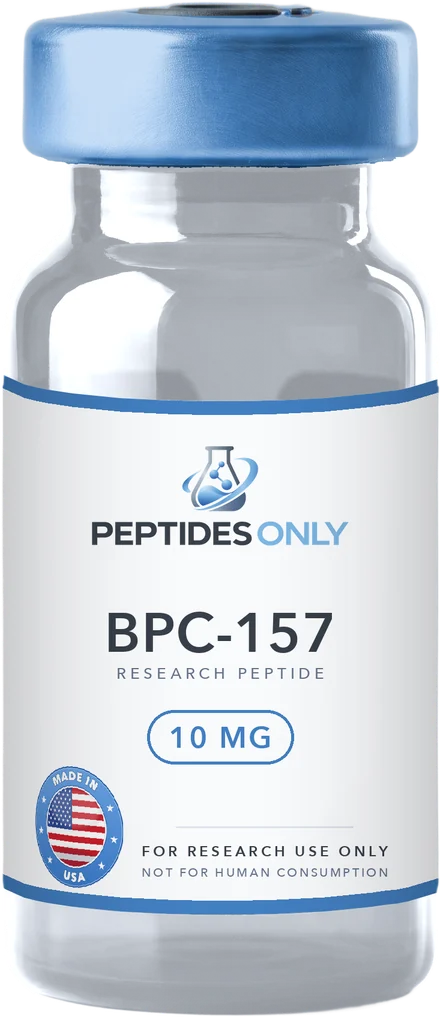
BPC-157
Stable gastric pentadecapeptide, a staple of tissue-repair research.
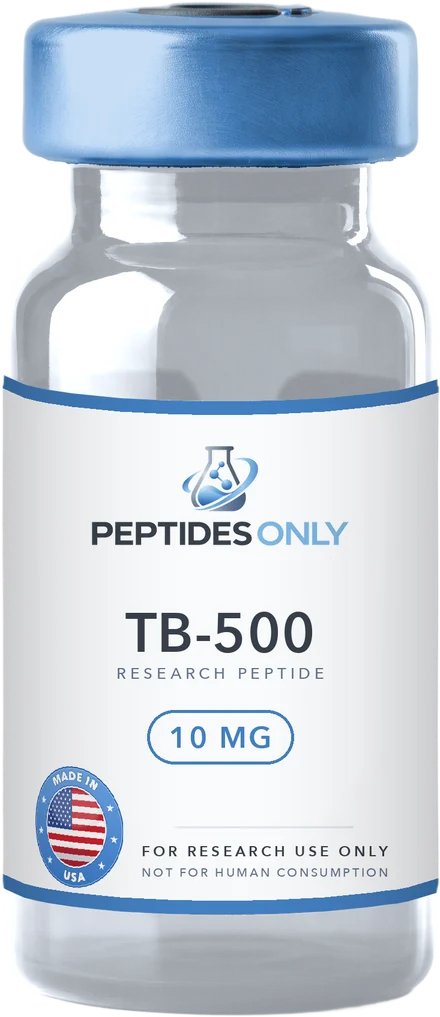
TB-500
Thymosin beta-4 fragment studied for cell migration and repair.
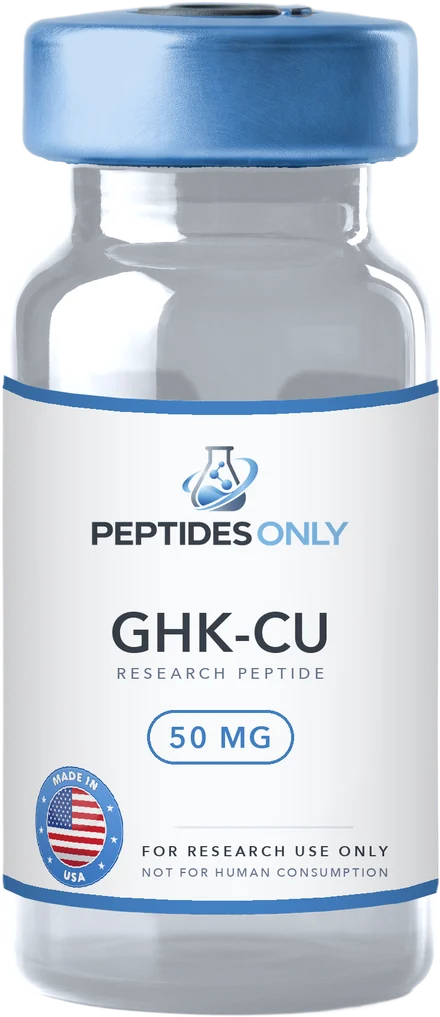
GHK-Cu
Copper-binding tripeptide used in collagen and skin-matrix research.