
What Are Research Peptides? Research Use Only (RUO) Explained
Research peptides are synthetic peptides sold as laboratory reagents for in vitro and animal research, labeled research use only (RUO) and not intended for human or veterinary use. They are neither FDA-approved drugs nor pharmacy-compounded preparations: they carry no clinical claims or usage information, and their quality depends on how each lot is made and tested.
What are research peptides?
Peptides are short chains of amino acids joined by peptide bonds. There is no sharp cutoff, but chains of up to roughly 50 amino acids are usually called peptides and longer ones proteins. Peptides are an established class of medicines: since insulin was introduced almost a century ago, more than 80 peptide drugs have reached the market1, and peptides are produced by both chemical and biological methods2.
A research peptide is a synthetic peptide supplied as a laboratory reagent for cell culture, biochemical assays, analytical work and animal studies. Some research peptides share a sequence with the active ingredient of an approved medicine; many have only been studied preclinically. Either way, the research product is not a medicine: no regulator has reviewed it for use in people.
What does research use only (RUO) mean?
Research use only is a labeling designation: the product is intended for laboratory research and not for use in people or animals, for diagnosis, or for clinical decisions. In US regulations the phrase appears most formally for in vitro diagnostic (IVD) products. Under 21 CFR 809.10(c)(2)(i), an IVD product in the laboratory research phase bears the statement "For Research Use Only. Not for use in diagnostic procedures." For drugs, 21 CFR 312.160 covers shipment of a drug intended solely for in vitro tests or laboratory research animals, labeled as not for use in humans, and requires the shipper to use due diligence that the recipient actually conducts such tests.
The FDA's November 2013 guidance, Distribution of In Vitro Diagnostic Products Labeled for Research Use Only or Investigational Use Only, makes a point that applies well beyond diagnostics: the label has to match the intended use. The guidance describes intended use as the objective intent of those responsible for the product, judged from the totality of the circumstances, including labeling, advertising, other statements by the seller and how the product is sold. Clinical claims or clinical interpretive information attached to an RUO product count as evidence of a conflicting intended use. The drug regulations define intended use the same way, in 21 CFR 201.128.
In practice, this is why a responsible RUO supplier publishes research context but no usage instructions and no claims about effects in people. Under the FDA's intended-use framework, a disclaimer alone does not settle the question when the rest of a seller's marketing points to human use.
Research peptides vs approved drugs vs compounded peptides
FDA-approved peptide drugs have been reviewed by the FDA for safety and effectiveness for specific indications, are made under current good manufacturing practice (CGMP) and carry approved labeling.
Compounded peptides are prepared by pharmacies. Under section 503A of the Federal Food, Drug, and Cosmetic Act, a licensed pharmacist or physician compounds a drug for an identified individual patient based on a valid prescription, and bulk drug substances generally must meet a USP or NF monograph, be a component of an FDA-approved drug, or appear on the FDA's 503A bulks list. Outsourcing facilities under section 503B are subject to CGMP and may also supply office stock. The FDA states that compounded drugs are not FDA-approved and that it does not review them for safety, effectiveness or quality before they reach patients.
Research-use-only peptides are laboratory reagents: not prescribed, not dispensed and not intended for human or veterinary use. No regulator checks their quality before sale; that burden falls on the supplier's testing and the buyer's scrutiny.
The FDA's page on bulk drug substances that may present significant safety risks in compounding (updated April 2026) discusses several peptides also sold as research chemicals, including BPC-157 and the thymosin beta-4 fragment TB-500, noting limited safety information.
| FDA-approved drug | Compounded drug | Research use only (RUO) peptide | |
|---|---|---|---|
| Intended for | Patients, for approved indications | An identified patient with a prescription (503A), or office stock from an outsourcing facility (503B) | Laboratory research only; not for human or veterinary use |
| FDA review before sale | Yes: safety, effectiveness and quality | No | No |
| Manufacturing standard | CGMP | State pharmacy rules (503A) or CGMP (503B) | Set by the supplier and checked by testing |
| Clinical claims and directions | Approved labeling | From the prescriber | None |
| Typical documentation | Package insert | Pharmacy label | Lot-matched certificate of analysis |
How research peptides are made
Most peptides today, including peptide medicines, are made by solid-phase peptide synthesis (SPPS)3. The chain is built one amino acid at a time on an insoluble resin, with protecting groups controlling which reactive sites couple at each step. Fmoc chemistry is now the method of choice, helped by low-cost, high-quality building blocks from large-scale production of therapeutic peptides4. After the final coupling, the peptide is cleaved from the resin and deprotected, then purified, typically by preparative reversed-phase high-performance liquid chromatography (HPLC)5.
Synthesis leaves characteristic by-products. A review lists deletion and insertion sequences, racemized residues, side chains still carrying protecting groups, oxidation products, dimers, residual counterions such as trifluoroacetate and, where manufacturing controls are weak, contamination with unrelated peptides; the authors warn that such impurities can distort early functional studies3.
Peptides purified by reversed-phase HPLC often end up as trifluoroacetate (TFA) salts, and in one cell-culture study TFA reduced osteoblast and chondrocyte proliferation, leading the authors to recommend converting peptides to a hydrochloride or equivalent salt before biological testing6. The salt form is therefore worth checking on any certificate.
Finally, most research peptides are supplied as lyophilized (freeze-dried) powders. In pharmaceutical development, lyophilization is the most common way to make solid protein products with an acceptable shelf life, although freezing and drying impose their own stresses7. Our peptide storage guide covers how they are kept in the lab.
How identity and purity are verified
Two analyses answer the two basic questions about a lot. HPLC, the standard tool for separating and analyzing peptides5, measures purity, usually reported as the main peak's share of total peak area. Mass spectrometry checks identity by comparing the observed molecular mass with the theoretical mass of the intended sequence. Mass spectrometry can also detect synthesis by-products such as deletion and insertion peptides8, and coupling a mass detector to liquid chromatography allows direct identification of the main compound and small impurities in routine quality control9.
Neither test is enough alone: HPLC purity says nothing about whether the main peak is the correct peptide, and a correct mass says little about how much of the sample is something else. A credible certificate reports both, for the specific lot in the vial, and shows:
- A lot or batch number that matches the label on the vial
- The HPLC chromatogram and purity figure, with the method conditions
- The mass spectrum, with the observed mass next to the expected mass
- The compound name, the testing laboratory and the test date
What buyers should expect from a supplier
Certificates are only as good as the testing behind them. When one laboratory re-tested synthetic peptides bought for R&D with a requested purity of at least 95.0%, only 44.0% met that purity, the main compound in one sample had a different structure from the peptide ordered, and the authors warned that relying on suppliers' certificates alone could have serious consequences for research10. Products sold outside legitimate supply chains can be worse: falsified peptide drugs bought from suspected illegal internet pharmacies on the Belgian market varied widely in content, had purities between 5% and 75% for cysteine-containing peptides, and some samples were contaminated with arsenic or lead11.
That is the case for independent, lot-specific testing. Every Peptides Only lot ships with a lot-matched certificate of analysis from an independent lab, reporting HPLC purity and mass-spec identity, and every certificate is published in the COA library. See our testing standard, how to read a peptide COA and, for a fuller checklist, how to choose a research peptide supplier.
Are research peptides legal?
The honest answer depends on what is being done with the product and where. In the United States, research peptides are sold as reagents for laboratory research, and their RUO labeling defines that scope. Use in people falls outside it, and, as described above, the FDA judges a product by its intended use rather than by its disclaimer.
Other rules can apply as well. Individual compounds may be restricted in particular jurisdictions, sporting bodies prohibit some peptides outright (the World Anti-Doping Agency's Prohibited List, for example, names thymosin-β4 derivatives such as TB-500), and research institutions set their own purchasing and handling requirements. This article is general information, not legal advice. The terms under which Peptides Only sells are set out in our research-use policy.
What research use only does not mean
- It does not mean a product has been tested or verified; quality depends on the supplier's analysis, and independent re-testing has found supplier certificates unreliable10.
- It does not mean a compound has been shown to be safe or effective in people; many research peptides have been studied only in cell and animal models.
- It is not a regulatory approval, clearance or registration, and it does not make use in people or animals acceptable.
Frequently asked questions
What does for research use only mean on a peptide?
It means the product is supplied as a laboratory reagent for in vitro or animal research and is not intended for human or veterinary use, diagnosis or clinical decisions. In the FDA's view, an RUO label must be consistent with how the product is actually marketed and distributed.
Are research peptides the same as compounded peptides?
No. Compounded drugs are prepared by licensed pharmacies or outsourcing facilities under sections 503A and 503B of the Federal Food, Drug, and Cosmetic Act. Research peptides are laboratory reagents that are not prescribed, dispensed or intended for human use.
Are research peptides FDA-approved?
No. RUO products are not reviewed or approved by the FDA. Some share a sequence with the active ingredient of an approved drug, but the research material is not that drug and carries none of its approved labeling.
Are research peptides legal?
In the US they are sold as reagents for laboratory research, and human use is outside that scope. Rules vary by place and purpose, so this is not legal advice; see our research-use policy.
How are research peptides tested for purity and identity?
HPLC measures purity and mass spectrometry confirms identity, ideally on the same lot that ships5,9. Independent re-testing has found that supplier certificates are not always reliable10, which is why lot-matched certificates from an independent lab matter.
Why are research peptides sold as a powder?
Most are lyophilized (freeze-dried) because a dry solid generally keeps better in storage than a solution, the same reason lyophilization is the most common route to solid protein pharmaceuticals7.
References
- Muttenthaler M, King GF, et al. Trends in peptide drug discovery. Nat Rev Drug Discov. 2021;20(4):309-325. PubMed 33536635
- Wang L, Wang N, et al. Therapeutic peptides: current applications and future directions. Signal Transduct Target Ther. 2022;7(1):48. PubMed 35165272
- D'Hondt M, Bracke N, et al. Related impurities in peptide medicines. J Pharm Biomed Anal. 2014;101:2-30. PubMed 25044089
- Behrendt R, White P, et al. Advances in Fmoc solid-phase peptide synthesis. J Pept Sci. 2016;22(1):4-27. PubMed 26785684
- Mant CT, Chen Y, et al. HPLC analysis and purification of peptides. Methods Mol Biol. 2007;386:3-55. PubMed 18604941
- Cornish J, Callon KE, et al. Trifluoroacetate, a contaminant in purified proteins, inhibits proliferation of osteoblasts and chondrocytes. Am J Physiol. 1999;277(5):E779-83. PubMed 10567002
- Wang W. Lyophilization and development of solid protein pharmaceuticals. Int J Pharm. 2000;203(1-2):1-60. PubMed 10967427
- Merrifield RB, Singer J, et al. Mass spectrometric evaluation of synthetic peptides for deletions and insertions. Anal Biochem. 1988;174(2):399-414. PubMed 3239745
- D'Hondt M, Gevaert B, et al. Implementation of a single quad MS detector in routine QC analysis of peptide drugs. J Pharm Anal. 2016;6(1):24-31. PubMed 29403959
- Verbeke F, Wynendaele E, et al. Quality evaluation of synthetic quorum sensing peptides used in R&D. J Pharm Anal. 2015;5(3):169-181. PubMed 29403929
- Janvier S, Cheyns K, et al. Impurity profiling of the most frequently encountered falsified polypeptide drugs on the Belgian market. Talanta. 2018;188:795-807. PubMed 30029448
Compounds discussed
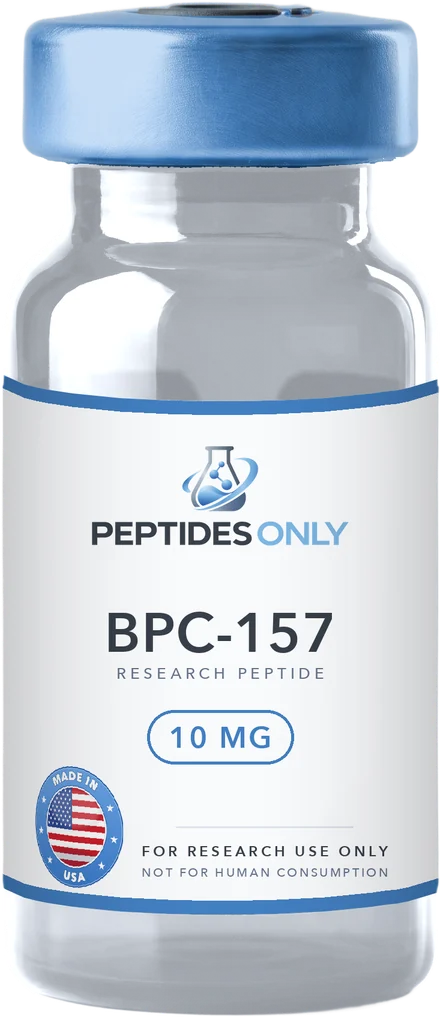
BPC-157
Stable gastric pentadecapeptide, a staple of tissue-repair research.
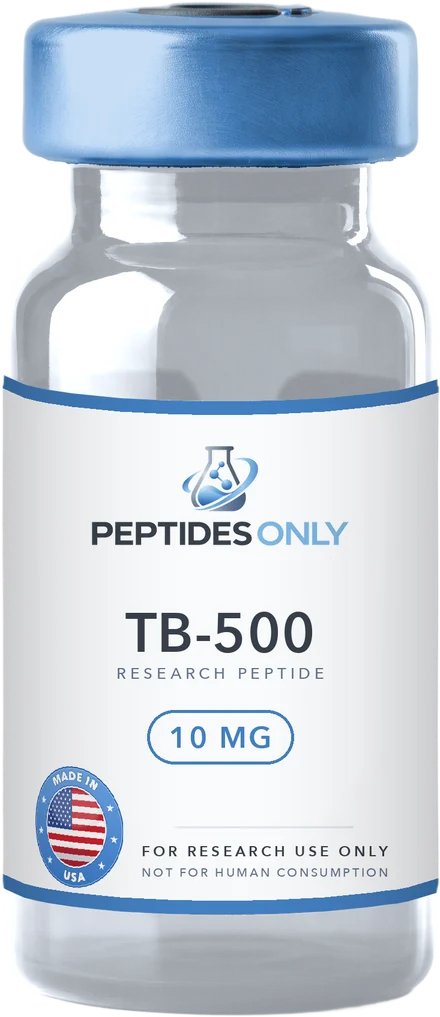
TB-500
Thymosin beta-4 fragment studied for cell migration and repair.
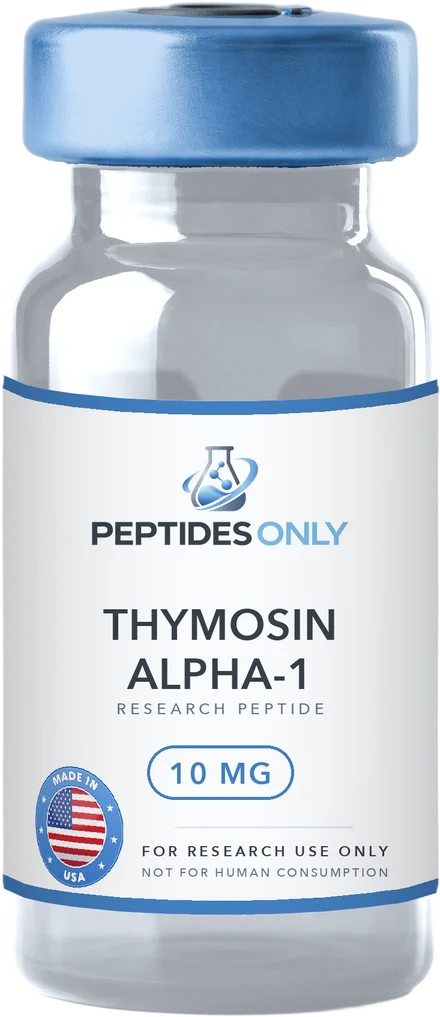
Thymosin Alpha-1
Thymic peptide studied in T-cell and immune-modulation research.