Lyophilized vial
BPC-157
Stable gastric pentadecapeptide, a staple of tissue-repair research.
$85.00
2 for $85 · $42.50/vial

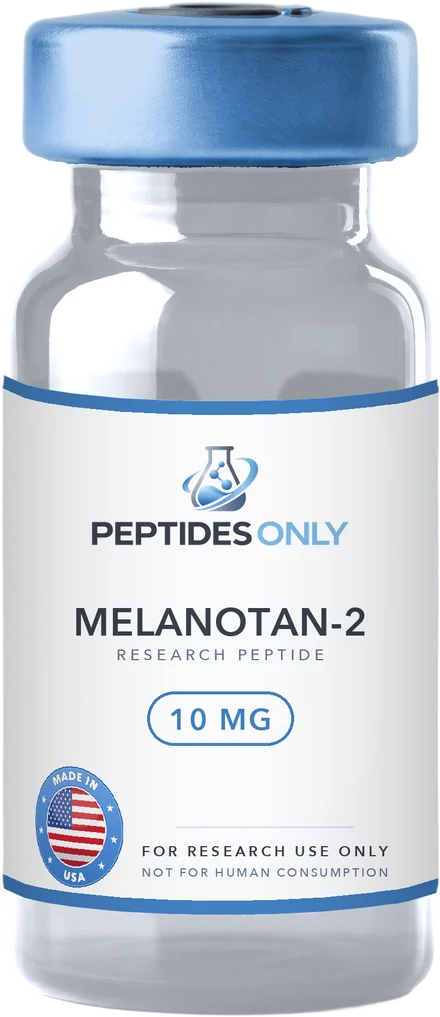
Cyclic melanocortin analogue for pigmentation research.
Melanotan-2 10 mg
Your order ships with the certificate for its own lot.
Cyclic melanocortin analogue for pigmentation research.
10 mg per vial, as a lyophilized powder in a sealed glass vial with a crimped cap. The lot number on the label matches the certificate of analysis in the COA library.
Store lyophilized powder frozen (−20 °C) or refrigerated, sealed and away from light. Once reconstituted, keep refrigerated (2–8 °C).
Handle in a laboratory setting using appropriate protective equipment. Consult the certificate of analysis and safety data for lot-specific information.
Melanotan-2 (melanotan II, MT-II) is a synthetic cyclic seven-residue analog of alpha-melanocyte-stimulating hormone (alpha-MSH), designed at the University of Arizona. It activates several melanocortin receptors and is used in research as a reference agonist for pathways involved in pigmentation, appetite and sexual function. It has never been approved as a medicine, and Peptides Only supplies it for laboratory research only.
Melanotan II is a lactam-bridged cyclic heptapeptide, Ac-Nle-Asp-His-D-Phe-Arg-Trp-Lys-NH2, based on positions 4 to 10 of alpha-MSH. Its first human study described it as a superpotent melanotropic peptide1, and its designers describe this family of analogs as long-acting and resistant to enzymatic breakdown2.
It was one of two analogs developed by Hadley, Hruby, Dorr and colleagues in Tucson. The linear analog, melanotan I, went into clinical studies of skin tanning, while the cyclic, truncated melanotan II was studied for male erectile dysfunction. A later analog of melanotan II, PT-141, was taken forward by Palatin Technologies2; by 2007, as bremelanotide, it was the only melanocortin agent that had been studied clinically in both men and women3.
Melanocortin receptors are a family of five G protein-coupled receptors involved in pigmentation, steroid production and energy balance. Synthetic alpha-MSH derivatives, among them NDP-MSH (melanotan I), melanotan II and the antagonist SHU9119, have become standard tool compounds for studying them and served as scaffolds for FDA-approved drugs4.
MT-II acts on more than one subtype. Its skin-darkening effect in people1 reflects the pigment pathway that alpha-MSH controls, while appetite research has focused on its agonist activity at the brain MC3 and MC4 receptors5.
Pigmentation. In a small pilot phase I study, MT-II produced measurable darkening of the face, upper body and buttocks in two participants, assessed by reflectance a week after the last administration. Mild nausea was reported at most levels tested, somnolence and fatigue in one participant at the highest, and a stretching and yawning response accompanied spontaneous erections1.
Erectile function. The same Arizona group then ran a double-blind, placebo-controlled crossover study in 10 men with psychogenic erectile dysfunction: 8 developed erections after MT-II, and the mean duration of high tip rigidity was 38 minutes, against 3 minutes on placebo. Nausea, stretching and yawning, and reduced appetite were more common than with placebo6.
Appetite. In mice, MT-II delivered into the brain ventricles suppressed feeding in four models of overeating, and the melanocortin antagonist SHU9119 blocked the effect. The experiment helped show that melanocortin neurons exert a tonic brake on feeding and explained the agouti obesity syndrome5.
MT-II never completed clinical development, yet products labeled as melanotan are sold through unregulated channels for tanning. A 2017 review of that use summarized case reports of changes in existing moles, new and sometimes dysplastic nevi, and four melanomas arising during or shortly after melanotan use. It stressed that conclusive evidence of causation is lacking, and noted that multiple national health organizations have issued safety warnings about melanotan I and II7. In the UK, the Medicines and Healthcare products Regulatory Agency has highlighted the potential impurity of these unregulated products8.
In one documented case, a man with a history of melanoma and dysplastic nevi developed crops of new atypical nevi after self-administering a synthetic alpha-MSH, and they faded after he stopped9. Forensic laboratories have also had to characterize seized black-market MT-II and bremelanotide without reference standards10, a reminder that identity cannot be assumed without analytical testing.
Peptides Only supplies Melanotan-2 as a lyophilized powder for laboratory research only. Every lot ships with a lot-matched certificate of analysis from an independent lab, reporting HPLC purity and mass-spectrometry identity, published in our COA library; our testing standard explains what is checked. Its closest relative is PT-141, and the article PT-141 vs Melanotan-2 compares the two in detail.
No. Melanotan II is not an approved medicine in the United States or elsewhere7. Two related melanocortin peptides are: afamelanotide, the drug name for the linear analog Nle4-D-Phe7-alpha-MSH11, which the FDA approved in October 2019 to increase pain-free light exposure in adults with a history of phototoxic reactions from erythropoietic protoporphyria, and bremelanotide (PT-141), approved in June 2019 for premenopausal women with acquired, generalized hypoactive sexual desire disorder12.
PT-141 was developed as an analog of melanotan II2. The two share the same cyclic seven-residue ring; their formulas differ by one nitrogen, one hydrogen and one oxygen, consistent with a C-terminal acid in PT-141 where MT-II carries an amide. Bremelanotide completed phase 3 trials and FDA approval12; MT-II did not. See PT-141 vs Melanotan-2.
Melanotan I (NDP-MSH) is a linear analog that was taken into tanning studies; melanotan II is a cyclic, truncated analog studied mainly for erectile function2,4. The linear analog became an approved drug as afamelanotide11; melanotan II did not.
Because it activates brain melanocortin receptors that regulate feeding. In mice it suppressed feeding in four models of overeating, an effect blocked by the antagonist SHU91195, and reduced appetite was reported in the early human crossover study6.
Like most lyophilized peptides, sealed, dry, cold and protected from light. Our guide to peptide storage and stability covers the general principles.
Research summary reviewed 2026-10-26 against the cited literature.
Stable gastric pentadecapeptide, a staple of tissue-repair research.
Copper-binding tripeptide used in collagen and skin-matrix research.
Essential coenzyme for studies of cellular metabolism and ageing.
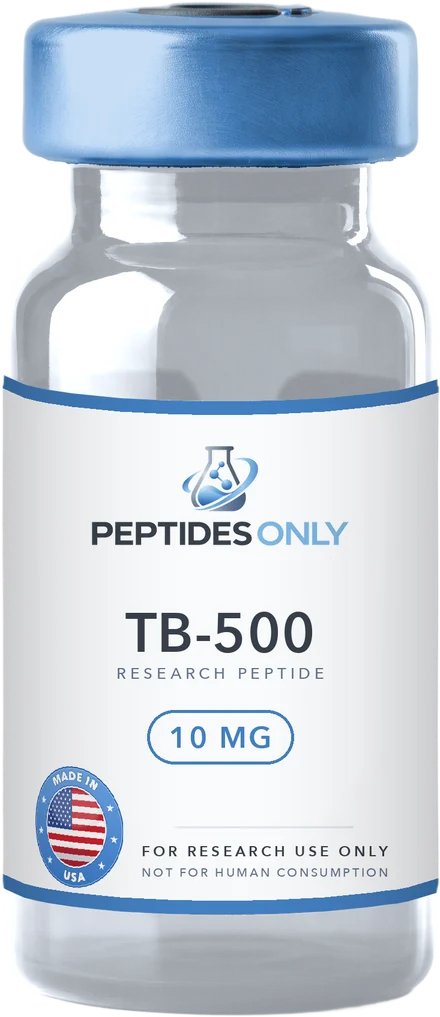
Thymosin beta-4 fragment studied for cell migration and repair.
Operated by DND Wellness LLC · 1309 Coffeen Ave, Suite 1200, Sheridan, WY 82801.
support@peptides-only.com · (508) 404-8124
Use the chat widget to ask a question. Informational and promotional text messages require separate, optional consent. Message frequency varies. Msg & data rates may apply. Reply STOP to unsubscribe or HELP for help. Consent is not a condition of purchase. 21+.
SMS consent & support · SMS terms & Terms of Service · Privacy Policy