
PT-141 vs Melanotan-2: How Bremelanotide and Melanotan II Compare
PT-141 (bremelanotide) and Melanotan-2 (melanotan II) are closely related cyclic melanocortin peptides: PT-141 was developed from melanotan II and differs from it only at the C-terminus. Melanotan II was studied in the 1990s for tanning and erectile function and never approved, while PT-141 went through phase 3 trials and is the active ingredient of an FDA-approved medicine for premenopausal women with hypoactive sexual desire disorder. The research on each, and on the receptors they share, explains the gap.
What are PT-141 and Melanotan-2?
Both peptides are synthetic analogs of alpha-melanocyte-stimulating hormone (alpha-MSH). Melanotan II came first: a lactam-bridged cyclic heptapeptide based on positions 4 to 10 of alpha-MSH, designed at the University of Arizona and described in its first human study as superpotent1. Its designers took the linear analog melanotan I into tanning studies and the cyclic melanotan II into erectile dysfunction studies2.
PT-141 is a later analog of melanotan II developed by Palatin Technologies2. It is an agonist at melanocortin receptors, including MC3R and MC4R in the central nervous system3, and under the nonproprietary name bremelanotide it became, by 2007, the only melanocortin agent studied clinically in both men and women4. Peptides Only stocks both for laboratory research: PT-141 and Melanotan-2.
PT-141 vs Melanotan-2 at a glance
| PT-141 (bremelanotide) | Melanotan-2 (melanotan II) | |
|---|---|---|
| Origin | Analog of melanotan II developed by Palatin Technologies2 | Designed at the University of Arizona as a superpotent alpha-MSH analog1 |
| Structure | Cyclic heptapeptide, Ac-Nle-cyclo[Asp-His-D-Phe-Arg-Trp-Lys]-OH | Cyclic heptapeptide, Ac-Nle-cyclo[Asp-His-D-Phe-Arg-Trp-Lys]-NH21 |
| Formula and mass | C50H68N14O10, about 1025 Da | C50H69N15O9, about 1024 Da |
| Receptors studied | Agonist at MC3R and MC4R3; MC4R considered most relevant5 | Agonist at brain MC3R and MC4R6 and at the pigment pathway1; standard reference tool7 |
| Main research models | Rat and primate erection models; female rat sexual behavior; phase 1 to 3 human trials | Pilot human tanning study; small erectile dysfunction crossover; mouse feeding studies |
| Key findings | Higher desire scores and lower distress than placebo in two phase 3 trials8 | Skin darkening in a pilot study1; erections in 8 of 10 men9; feeding suppression in mice6 |
| Common adverse events | Nausea, flushing, headache8 | Nausea, stretching and yawning, reduced appetite9 |
| Regulatory status | Active ingredient of Vyleesi, FDA-approved June 2019 for premenopausal women with acquired, generalized HSDD10 | Not approved; sold through unregulated channels and the subject of national safety warnings11 |
Structure: one ring, two endings
Melanotan II is Ac-Nle-Asp-His-D-Phe-Arg-Trp-Lys-NH2, with a lactam bridge closing the ring between aspartic acid and lysine1. PT-141 keeps that ring. The difference is the C-terminus: the molecular formulas differ by one nitrogen, one hydrogen and one oxygen, consistent with a free carboxylic acid in PT-141 where melanotan II carries an amide. The masses are almost identical, about 1025 and 1024 Da.
A one-group change can still matter in pharmacology, but the published record does not isolate what this particular change does. What is clear is that the two molecules were developed for different purposes and then followed very different regulatory paths.
Receptors and mechanism
Melanocortin receptors are a family of five G protein-coupled receptors involved in pigmentation, steroid production and energy balance, and melanotan II remains one of the standard tool compounds for studying them7. Its best-known mechanistic experiment concerns appetite: delivered into the brain ventricles of mice, MT-II suppressed feeding in four models of overeating, and the antagonist SHU9119 blocked the effect, showing that melanocortin neurons tonically restrain feeding6.
PT-141 research has concentrated on sexual behavior. In rats, systemic PT-141 increased c-Fos activity in hypothalamic neurons, and it produced erections in rats and non-human primates3. In female rats it selectively increased solicitational behaviors without changing lordosis, pacing, motor activity or sexual reward12. A 2022 review identifies MC4R in the medial preoptic area of the hypothalamus as the most relevant target, with animal data suggesting increased dopamine release5.
Human research: from pilot studies to phase 3
Melanotan II's human record is short. A pilot phase I study found skin darkening in two participants, along with mild nausea and spontaneous erections preceded by stretching and yawning1. A double-blind, placebo-controlled crossover study in 10 men with psychogenic erectile dysfunction followed: 8 developed erections, with a mean of 38 minutes of high tip rigidity against 3 minutes on placebo9. Development then shifted to its analog, PT-1412.
PT-141 moved further. Phase 2 trials of an intranasal formulation supported melanocortin-based approaches to erectile dysfunction, and preliminary data in women suggested effects on desire and arousal4. The pivotal RECONNECT program, two identical 24-week randomized, double-blind, placebo-controlled trials in 1,267 premenopausal women with HSDD, reported statistically significant increases in desire scores and reductions in related distress versus placebo8. The FDA approved bremelanotide as Vyleesi in June 201910.
Safety findings compared
Bremelanotide has a systematic safety record. Across about 3,500 participants in 43 studies, nausea occurred in 40.0% of recipients versus 1.3% on placebo, flushing in 20.3% versus 1.3%, and headache in 11.3% versus 1.9%. Focal hyperpigmentation was rare with labeled use but appeared in over a third of participants after up to 16 consecutive daily administrations, and small, transient blood-pressure increases were recorded13.
Melanotan II has no comparable dataset. Beyond the small 1990s studies, its safety picture comes from case reports linked to unregulated tanning use: changes in existing moles, new and sometimes dysplastic nevi, and four reported melanomas. The 2017 review that collected these reports stressed that causation is unproven and noted that multiple national health organizations have issued safety warnings about melanotan products11.
Limitations of the evidence
- Melanotan II's human data come from a few small studies and uncontrolled case reports; its mechanistic data are largely from rodents given the peptide directly into the brain.
- Bremelanotide's evidence is strong only for the approved population, premenopausal women with acquired, generalized HSDD10, and the phase 3 trials were sponsored by its developers8.
- Neither peptide is highly selective among melanocortin receptors5,6, so assigning an effect to one receptor relies on animal pharmacology.
- Research-grade peptides are not drug products. Forensic analysis of seized black-market melanotan II and bremelanotide shows why identity must be confirmed analytically14.
Choosing between PT-141 and Melanotan-2 for research
PT-141 fits work that needs to connect with the clinical literature on central MC4R signaling and sexual behavior. Melanotan II fits work that uses a broad melanocortin reference agonist, for example in pigmentation or feeding studies, often paired with an antagonist such as SHU91196,7.
Every Peptides Only lot ships with a lot-matched certificate of analysis (HPLC purity and mass-spec identity) from an independent lab, published in the COA library; our testing standard and the guide to reading a peptide COA explain what those results mean.
Frequently asked questions
Is PT-141 the same as Melanotan-2?
No. PT-141 was developed as an analog of melanotan II2 and shares its cyclic core, but the C-terminus differs and the two have different regulatory status: bremelanotide is an approved drug ingredient10, melanotan II is not.
Is Melanotan-2 approved by the FDA?
No. Melanotan II is not an approved medicine in the United States or elsewhere11. Two related peptides are FDA-approved: bremelanotide (PT-141)10 and afamelanotide, the linear analog Nle4-D-Phe7-alpha-MSH15, approved in 2019 for adults with a history of phototoxic reactions from erythropoietic protoporphyria.
Which is more selective, PT-141 or Melanotan-2?
Neither is highly selective. Bremelanotide is described as a nonselective melanocortin agonist with MC4R as its most relevant target5, and melanotan II acts on brain MC3 and MC4 receptors6 as well as the pigment pathway1.
References
- Dorr RT, Lines R, et al. Evaluation of melanotan-II, a superpotent cyclic melanotropic peptide in a pilot phase-I clinical study. Life Sci. 1996;58(20):1777-84. PubMed 8637402
- Hadley ME, Dorr RT. Melanocortin peptide therapeutics: historical milestones, clinical studies and commercialization. Peptides. 2006;27(4):921-30. PubMed 16412534
- Molinoff PB, Shadiack AM, et al. PT-141: a melanocortin agonist for the treatment of sexual dysfunction. Ann N Y Acad Sci. 2003;994:96-102. PubMed 12851303
- Shadiack AM, Sharma SD, et al. Melanocortins in the treatment of male and female sexual dysfunction. Curr Top Med Chem. 2007;7(11):1137-44. PubMed 17584134
- Pfaus JG, Sadiq A, et al. The neurobiology of bremelanotide for the treatment of hypoactive sexual desire disorder in premenopausal women. CNS Spectr. 2022;27(3):281-289. PubMed 33455598
- Fan W, Boston BA, et al. Role of melanocortinergic neurons in feeding and the agouti obesity syndrome. Nature. 1997;385(6612):165-8. PubMed 8990120
- Weirath NA, Haskell-Luevano C. Recommended Tool Compounds for the Melanocortin Receptor (MCR) G Protein-Coupled Receptors (GPCRs). ACS Pharmacol Transl Sci. 2024;7(9):2706-2724. PubMed 39296259
- Kingsberg SA, Clayton AH, et al. Bremelanotide for the Treatment of Hypoactive Sexual Desire Disorder: Two Randomized Phase 3 Trials. Obstet Gynecol. 2019;134(5):899-908. PubMed 31599840
- Wessells H, Fuciarelli K, et al. Synthetic melanotropic peptide initiates erections in men with psychogenic erectile dysfunction: double-blind, placebo controlled crossover study. J Urol. 1998;160(2):389-93. PubMed 9679884
- Dhillon S, Keam SJ. Bremelanotide: First Approval. Drugs. 2019;79(14):1599-1606. PubMed 31429064
- Habbema L, Halk AB, et al. Risks of unregulated use of alpha-melanocyte-stimulating hormone analogues: a review. Int J Dermatol. 2017;56(10):975-980. PubMed 28266027
- Pfaus JG, Shadiack A, et al. Selective facilitation of sexual solicitation in the female rat by a melanocortin receptor agonist. Proc Natl Acad Sci U S A. 2004;101(27):10201-4. PubMed 15226502
- Clayton AH, Kingsberg SA, et al. Safety Profile of Bremelanotide Across the Clinical Development Program. J Womens Health (Larchmt). 2022;31(2):171-182. PubMed 35147466
- Mestria S, Odoardi S, et al. LC-HRMS characterization of the skin pigmentation and sexual enhancers melanotan II and bremelanotide sold on the black market of performance and image enhancing drugs. Drug Test Anal. 2021;13(4):876-882. PubMed 33245851
- Lengweiler S, Kreim S, et al. Evaluation of the immunogenicity of the synthetic α-melanocyte-stimulating hormone (α-MSH) analogue afamelanotide ([Nle4-D-Phe7]-α-MSH, Scenesse®) in erythropoietic protoporphyria patients by ELISA detecting both anti-afamelanotide and anti-α-MSH antibodies. Skin Pharmacol Physiol. 2015;28(2):103-13. PubMed 25402764
Compounds discussed
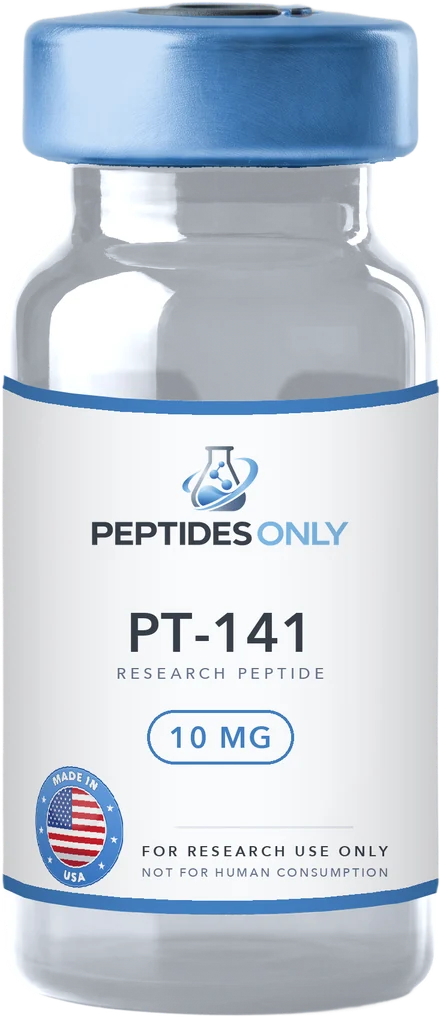
PT-141
Melanocortin-receptor agonist for central signalling research.
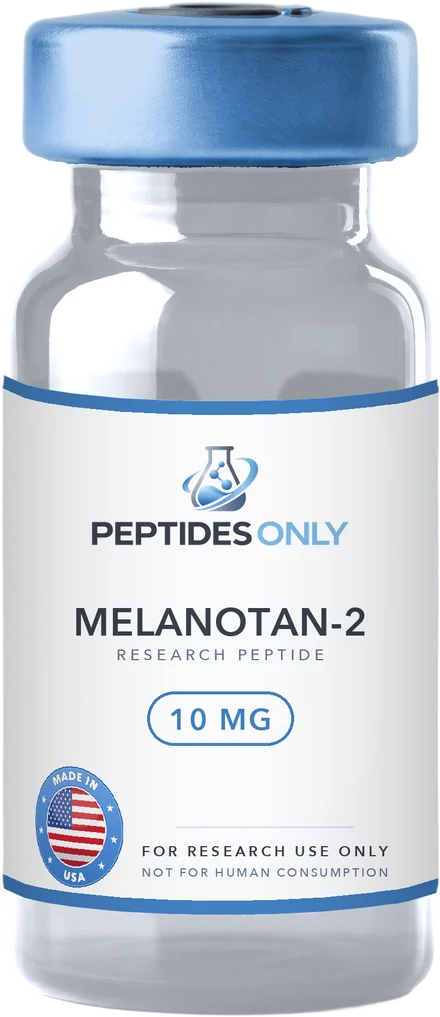
Melanotan-2
Cyclic melanocortin analogue for pigmentation research.