For research use only. Not for human or veterinary use. 21+.
Buy one, get one freeOn every vial · no code neededShop the offer
MANUFACTURED & SHIPPED FROM THE USA
Peptides · Immune

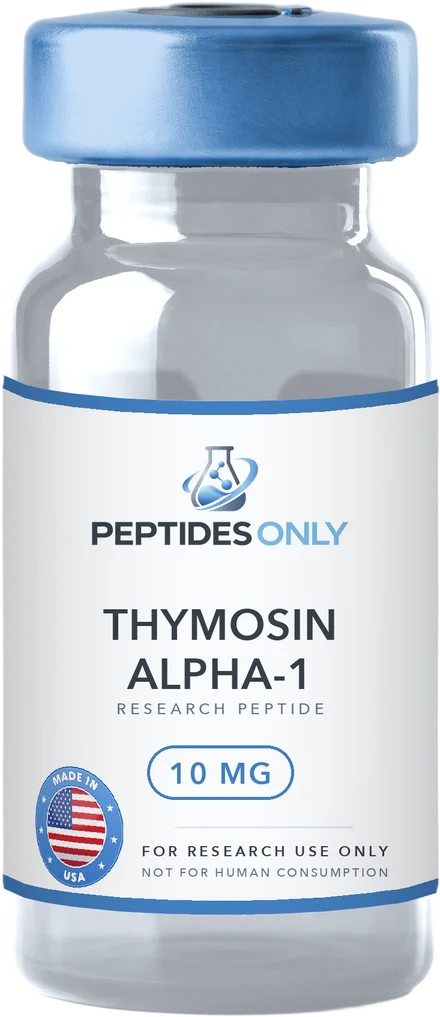
Thymosin Alpha-1

Third-party tested · COA with every order
CAS62304-98-7FormulaC129H215N33O55MW3108.30

Thymic peptide studied in T-cell and immune-modulation research.

  • Independently tested
  • Lot-matched COA
  • Lyophilized for stability
  • Ships from the USA
Research use only. Not for human or veterinary use. Sold to qualified researchers aged 21+.
$125.002 for $125 — $62.50 per vial
Buy one, get one free. Mix and match any 2 eligible vials and the lower-priced one is free — applied automatically. One-time purchases only.
1
Thymosin Alpha-1$125.002 for $125
Lot-matched documentation. Every order ships with the certificate for its lot. If a vial arrives damaged or doesn't match its paperwork, tell us within 72 hours and we'll replace it.

Latest lab results

Third-party tested

The certificate for the current lot is being uploaded. Every order ships with the COA for its lot, or request it now.

About Thymosin Alpha-1

Thymic peptide studied in T-cell and immune-modulation research.

Supplied as

10 mg per vial, as a lyophilized powder in a sealed glass vial with a crimped cap. The lot number on the label matches the certificate of analysis in the COA library.

Storage and handling

Store lyophilized powder frozen (−20 °C) or refrigerated, sealed and away from light. Once reconstituted, keep refrigerated (2–8 °C).

Handle in a laboratory setting using appropriate protective equipment. Consult the certificate of analysis and safety data for lot-specific information.

Important research notice. This product is intended solely for in-vitro and laboratory research. It is not a drug, food, supplement or cosmetic, has not been evaluated by the FDA, and must not be used in humans or animals. Peptides Only does not provide usage or dosing information.

Research summary

Thymosin alpha-1 (Tα1, thymalfasin) is a 28-amino-acid, N-terminally acetylated peptide first isolated from calf thymus and sequenced in 1977. It is studied in immunology research for its effects on dendritic cells, Toll-like receptor signaling and T-cell responses, and synthetic thymalfasin has been examined in clinical trials in viral hepatitis, cancer and sepsis. It is not an FDA-approved drug in the United States.

Also known as
Thymosin α1 · Tα1 · Thymalfasin · Zadaxin · Thymosin alpha 1
Sequence
Ac-Ser-Asp-Ala-Ala-Val-Asp-Thr-Ser-Ser-Glu-Ile-Thr-Thr-Lys-Asp-Leu-Lys-Glu-Lys-Lys-Glu-Val-Val-Glu-Glu-Ala-Glu-Asn-OH

What is thymosin alpha-1?

Thymosin alpha-1 was purified from thymosin fraction 5, a calf-thymus extract, and described in 1977 as a heat-stable, highly acidic polypeptide of 28 amino acid residues, one of several fraction 5 peptides thought to take part in the regulation, differentiation and function of T cells1. Its N-terminal serine is acetylated. Ren and colleagues noted in 2011 that Tα1 had until then been made only by chemical synthesis, and used tandem mass spectrometry to confirm the sequence and acetylation of a recombinant version2.

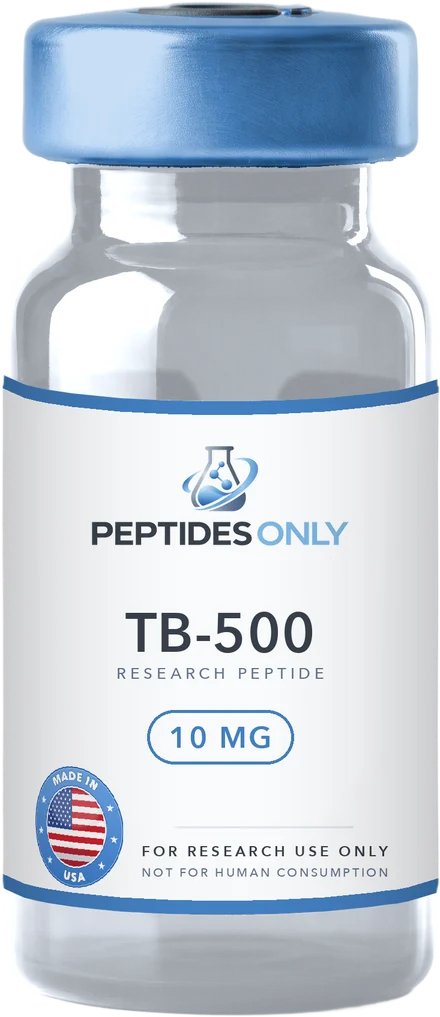
In the body, Tα1 is not made as a stand-alone peptide. It corresponds to the N-terminus of prothymosin alpha, a larger and very acidic protein: the researchers who isolated prothymosin alpha from rat thymus concluded it was the native polypeptide from which Tα1 and other fragments were generated during preparation of fraction 53, and later work described Tα1 as produced in vivo by cleavage of prothymosin alpha in diverse mammalian tissues4. Despite the shared name, Tα1 is unrelated to thymosin beta-4 and to TB-500; our thymosin alpha-1 vs thymosin beta-4 comparison explains the difference.

Mechanisms under study

Most mechanistic work centers on dendritic cells, which sense infection and shape T-cell responses. In a 2004 study, Tα1 induced maturation and interleukin-12 production in fungus-exposed dendritic cells through MyD88-dependent Toll-like receptor signaling, and the synthetic peptide protected mice that had received hematopoietic transplants from experimental aspergillosis5. Other pathways examined in the literature:

  • Antiviral sensing: activation of plasmacytoid dendritic cells through TLR9 and MyD88, leading to interferon regulatory factor 7 activation, in a murine cytomegalovirus model4.
  • Tolerance: induction of indoleamine 2,3-dioxygenase activity in dendritic cells, which the same group linked to transplantation tolerance and reduced inflammatory allergy in mouse models4.
  • Multiple immune-cell subsets: a 2016 review described the mechanism as pleiotropic, acting through Toll-like receptors on myeloid and plasmacytoid dendritic cells and initiating production of immune-related cytokines6.
  • Thymic origins: Tα1 was first identified as the thymic compound that restored immune function in thymectomized mice6.

Clinical research on thymalfasin

Tα1 also has a long clinical record. A 2009 review reported that synthetic Tα1 was approved in more than 35 countries for hepatitis B and C and as an immune stimulant and vaccine adjuvant, with late-stage trials then under way in the United States and Europe7. Its development history runs from early physician-sponsored studies under US investigational new drug applications to phase 3 trials with hundreds of patients in the United States, Italy and China8. Selected findings:

  • Chronic hepatitis B: a 2008 meta-analysis of four randomized trials (199 patients) comparing Tα1 with interferon alpha found responses were not greater when treatment ended but tended to accumulate during follow-up, mostly in HBeAg-negative disease9.
  • Metastatic melanoma: a randomized study of 488 patients reported more tumor responses when Tα1 was added to dacarbazine-based regimens; differences in overall and progression-free survival did not reach conventional statistical significance10.
  • Sepsis: the TESTS phase 3 trial randomized 1,106 adults at 22 centers in China and found no difference in 28-day all-cause mortality between Tα1 and placebo (23.4% vs 24.1%)11.
  • COVID-19: a retrospective, non-randomized review of 76 severe cases in Wuhan reported lower mortality and higher T-cell counts among patients who received Tα112.

Is thymosin alpha-1 FDA-approved?

No. Thymalfasin has been approved by regulators outside the United States7, but it is not an FDA-approved drug; in the US it has been studied as an investigational drug8. The clinical findings above concern a licensed pharmaceutical product and are given as research context only. Thymosin Alpha-1 sold by Peptides Only is a lyophilized laboratory reagent and is not intended for human or veterinary use.

Limitations of the evidence

  • Much of the mechanistic evidence comes from mouse and cell-culture models and from a small number of research groups5,4.
  • Clinical results are mixed: the largest placebo-controlled sepsis trial was neutral11, and the survival differences in the melanoma study were not statistically significant10.
  • The hepatitis B meta-analysis pooled only four small trials9, and the COVID-19 data are retrospective and non-randomized12.
  • Findings with pharmaceutical thymalfasin do not transfer automatically to research-grade material.

Verifying a lot of thymosin alpha-1

Mass spectrometry of synthetic and recombinant N-acetylated Tα1 has given molecular masses of about 3,107 Da, the reference point for an identity test2. Every Peptides Only lot ships with a lot-matched certificate of analysis from an independent lab, reporting HPLC purity and mass-spec identity, and every certificate is published in the COA library. Our guide to reading a peptide COA explains what to check.

Thymosin Alpha-1 FAQ

Is thymosin alpha-1 FDA-approved?

No. Thymalfasin is not an FDA-approved drug in the US, although a 2009 review reported approvals in more than 35 other countries7. Thymosin Alpha-1 from Peptides Only is sold for laboratory research only.

Is thymosin alpha-1 the same as thymalfasin or Zadaxin?

Thymalfasin is the nonproprietary name for synthetic thymosin alpha-1, and Zadaxin is a brand name under which it has been marketed outside the US. All three names refer to the same 28-residue, N-acetylated sequence2, although a research reagent with that sequence is not a licensed medicine.

What is the difference between thymosin alpha-1 and thymosin beta-4 (TB-500)?

They are unrelated peptides that share a name because both were first purified from the same calf-thymus extract. Tα1 is a 28-residue fragment of prothymosin alpha studied in immune signaling1,3; thymosin beta-4 is a larger actin-binding protein, and TB-500 is a market name for a short synthetic fragment of it. See thymosin alpha-1 vs thymosin beta-4.

What does thymosin alpha-1 do in research models?

In mouse and cell studies it has been reported to activate dendritic cells through Toll-like receptor and MyD88 signaling, increase interleukin-12 production and induce the tolerance-associated enzyme indoleamine 2,3-dioxygenase5,4. These are model findings, not effects established in people.

How is lyophilized thymosin alpha-1 stored?

Like other lyophilized peptides, it is generally kept sealed, cold, dry and away from light, and allowed to reach room temperature before opening so condensation does not form. Our peptide storage and stability guide covers the general principles.

Further reading

References

  1. Goldstein AL, Low TL, et al. Thymosin alpha1: isolation and sequence analysis of an immunologically active thymic polypeptide. Proc Natl Acad Sci U S A. 1977;74(2):725-9. PubMed 265536
  2. Ren Y, Yao X, et al. Production of Nα-acetylated thymosin α1 in Escherichia coli. Microb Cell Fact. 2011;10:26. PubMed 21513520
  3. Haritos AA, Goodall GJ, et al. Prothymosin alpha: isolation and properties of the major immunoreactive form of thymosin alpha 1 in rat thymus. Proc Natl Acad Sci U S A. 1984;81(4):1008-11. PubMed 6583693
  4. Romani L, Bistoni F, et al. Thymosin alpha1: an endogenous regulator of inflammation, immunity, and tolerance. Ann N Y Acad Sci. 2007;1112:326-38. PubMed 17495242
  5. Romani L, Bistoni F, et al. Thymosin alpha 1 activates dendritic cells for antifungal Th1 resistance through toll-like receptor signaling. Blood. 2004;103(11):4232-9. PubMed 14982877
  6. King R, Tuthill C. Immune Modulation with Thymosin Alpha 1 Treatment. Vitam Horm. 2016;102:151-78. PubMed 27450734
  7. Goldstein AL, Goldstein AL. From lab to bedside: emerging clinical applications of thymosin alpha 1. Expert Opin Biol Ther. 2009;9(5):593-608. PubMed 19392576
  8. Tuthill C, Rios I, et al. Thymosin alpha 1: past clinical experience and future promise. Ann N Y Acad Sci. 2010;1194:130-5. PubMed 20536460
  9. Yang YF, Zhao W, et al. Comparison of the efficacy of thymosin alpha-1 and interferon alpha in the treatment of chronic hepatitis B: a meta-analysis. Antiviral Res. 2008;77(2):136-41. PubMed 18078676
  10. Maio M, Mackiewicz A, et al. Large randomized study of thymosin alpha 1, interferon alfa, or both in combination with dacarbazine in patients with metastatic melanoma. J Clin Oncol. 2010;28(10):1780-7. PubMed 20194853
  11. Wu J, Pei F, et al. The efficacy and safety of thymosin α1 for sepsis (TESTS): multicentre, double blinded, randomised, placebo controlled, phase 3 trial. BMJ. 2025;388:e082583. PubMed 39814420
  12. Liu Y, Pan Y, et al. Thymosin Alpha 1 Reduces the Mortality of Severe Coronavirus Disease 2019 by Restoration of Lymphocytopenia and Reversion of Exhausted T Cells. Clin Infect Dis. 2020;71(16):2150-2157. PubMed 32442287

Research summary reviewed 2026-10-26 against the cited literature.

More Peptides

You might also need

View all
GHK-Cu 50 mg — Peptides Only, research use onlyBestsellerBuy One Get One
Lyophilized vial

GHK-Cu

Copper-binding tripeptide used in collagen and skin-matrix research.
$50.00
2 for $50 · $25/vial
NAD+ 100 mg — Peptides Only, research use onlyBestsellerBuy One Get One
Lyophilized vial

NAD+

Essential coenzyme for studies of cellular metabolism and ageing.
$50.00
2 for $50 · $25/vial

Contact Peptides Only

Operated by DND Wellness LLC · 1309 Coffeen Ave, Suite 1200, Sheridan, WY 82801.

support@peptides-only.com · (508) 404-8124

Use the chat widget to ask a question. Informational and promotional text messages require separate, optional consent. Message frequency varies. Msg & data rates may apply. Reply STOP to unsubscribe or HELP for help. Consent is not a condition of purchase. 21+.

SMS consent & support · SMS terms & Terms of Service · Privacy Policy