
Epitalon vs Pinealon: Comparing Two Khavinson Bioregulator Peptides
Epitalon (also spelled Epithalon) and Pinealon are short synthetic peptides from the bioregulator program of Vladimir Khavinson's St. Petersburg institute. Epitalon is the tetrapeptide Ala-Glu-Asp-Gly, studied mainly for telomerase activation, melatonin and aging markers; Pinealon is the tripeptide Glu-Asp-Arg, studied mainly in nerve-cell models of oxidative stress and amyloid toxicity. Both literatures come largely from one research group, with limited independent replication.
What are peptide bioregulators?
Khavinson's group at the St. Petersburg Institute of Bioregulation and Gerontology spent decades on polypeptide extracts of animal organs, such as the pineal preparation epithalamin and the thymic preparation thymalin. From the amino-acid composition of those extracts they designed short synthetic peptides, such as dipeptides for the thymus and tetrapeptides for the pineal gland, heart, liver and brain cortex, and reported that each stimulated growth of explants from its matching organ1.
The group's peptide theory of aging holds that aging involves changes in gene expression that reduce the synthesis of regulatory peptides, and that supplying such peptides could restore normal function1. It is the framework of one research school, and both Epitalon and Pinealon papers interpret their results within it. Readers should keep that context in mind when weighing the findings below.
Epitalon vs Pinealon at a glance
The table compares the two peptides on origin, structure, targets and evidence. Each row is discussed, with citations, in the sections that follow.
| Epitalon (Epithalon) | Pinealon | |
|---|---|---|
| Also known as | Epithalon, Epithalone, AEDG | EDR peptide |
| Sequence and size | Ala-Glu-Asp-Gly (tetrapeptide) | Glu-Asp-Arg (tripeptide, about 418 Da) |
| Origin | Designed from the amino-acid composition of epithalamin, a bovine pineal extract | Synthetic short peptide from the same bioregulator program |
| Proposed targets | Telomerase (hTERT); melatonin regulation; gene expression | Reactive oxygen species and ERK1/2 signaling; gene promoters (docking) |
| Main research models | Human fibroblast and epithelial cell cultures; mice and rhesus monkeys | Rat cerebellar neurons and PC12 cells; mouse hippocampal neurons; 5xFAD mice; induced human neurons |
| Key findings | Telomere elongation in cultured cells; aging biomarkers in mice; melatonin and glucose changes in old monkeys | Less oxidative stress and necrosis; preserved dendritic spines in amyloid models |
| Independent replication | Some cell studies from outside groups | None found in PubMed-indexed work |
| Regulatory status | Not FDA- or EMA-approved | Not FDA- or EMA-approved |
Epitalon research: telomeres, melatonin and life span
Epitalon was synthesized on the basis of the amino-acid composition of epithalamin and is known in the literature as Epitalon, Epithalon or Epithalone2. In 2003 Khavinson's group reported that it induced expression of the telomerase catalytic subunit, telomerase activity and telomere elongation in telomerase-negative human fetal fibroblasts3. In 2025 an independent group at Brunel University London reported telomere extension through hTERT and telomerase upregulation in normal human cells, and through alternative lengthening of telomeres (ALT) in breast cancer cell lines4.
In whole animals, female SHR mice given Epitalon over their lifetime showed no change in mean life span, but fewer bone-marrow chromosome aberrations and a longer life span among the last 10% of survivors5. In old rhesus monkeys, Epitalon raised night-time melatonin and lowered basal glucose and insulin6. An in vitro perifusion study of rat pineal glands in Paris, by contrast, found no effect on melatonin secretion in young or old animals7.
Pinealon research: neurons under stress
Pinealon work has focused on nerve cells rather than on the pineal gland. In rat cerebellar granule cells, neutrophils and PC12 cells under oxidative stress, Pinealon limited reactive oxygen species and necrotic death in a concentration-dependent way and delayed ERK1/2 activation8. In rats with diet-induced hyperhomocysteinemia during pregnancy, offspring of dams given Pinealon performed better in spatial learning tests, and their cerebellar neurons were more resistant to oxidative stress9.
In models of amyloid synaptotoxicity, EDR restored the number of mushroom-type dendritic spines in cultured mouse hippocampal neurons10 and prevented dendritic spine loss in 5xFAD transgenic mice11. These endpoints describe synaptic structure in disease models; they are not measures of cognition in people.
Where Epitalon and Pinealon overlap
The two peptides have been tested side by side in a few recent St. Petersburg studies. In neurons transdifferentiated from the skin fibroblasts of elderly donors, EDR, AEDG and a third peptide (KED) all increased dendritic branching; EDR also reduced oxidative DNA damage, while the tripeptides did not change mitochondrial or lysosomal activity or p16 levels12. In fetal mesenchymal stem cells converted into neurons, the abstract reports lower levels of the senescence markers p21 and beta-galactosidase for AEDG and KED, but not for EDR13.
Both peptides are also central to the group's mechanistic hypothesis: that ultrashort peptides enter cells, possibly through amino-acid and peptide transporters, and bind DNA or histones to change gene expression. Docking studies placed EDR at promoter sequences of genes such as CASP3, APOE and SOD211, and ranked EDR and other ultrashort peptides as efficient ligands of the LAT1, LAT2 and PEPT1 transporters14. These are computational predictions that still need direct experimental confirmation.
Limitations of the evidence
The biggest difference between these peptides and mainstream drug candidates is the evidence base. Nearly every Epitalon and Pinealon study traces back to Khavinson's institute or close collaborators, often in a few Russian journals. For Epitalon, independent cell studies now exist4, but a 2026 narrative review found human evidence limited to small physiological or biomarker studies and an older retinitis pigmentosa study, with no adequately powered randomized trial and inadequate pharmacokinetic and long-term safety data15. For Pinealon, we found no independent replication in PubMed-indexed research.
- Many endpoints are surrogate markers, such as reactive oxygen species, spine counts and gene expression, rather than functional outcomes.
- Mechanistic claims rely heavily on molecular docking.
- Some results conflict across models, such as Epitalon and melatonin6,7.
- Neither peptide is approved by the FDA or the European Medicines Agency.
Choosing between Epitalon and Pinealon for research
The two peptides answer different questions. Epitalon suits work on telomere maintenance, cellular senescence and pineal or circadian endpoints; Pinealon suits work on neuronal oxidative stress and synaptic models. Both sit in our bioregulators range as Epithalon and Pinealon, and Pinealon is also part of the Semax / Selank / Pinealon Set.
Every Peptides Only lot is independently tested and ships from the USA with a lot-matched certificate of analysis showing HPLC purity and mass-spec identity, published in our certificate library. For the neuropeptides often studied alongside Pinealon, see Semax vs Selank.
Frequently asked questions
What is the difference between Epitalon and Pinealon?
Epitalon is a tetrapeptide (Ala-Glu-Asp-Gly) studied mainly for telomerase activation, melatonin and aging markers3,6. Pinealon is a tripeptide (Glu-Asp-Arg) studied mainly in nerve-cell models of oxidative stress and amyloid toxicity8,10. Both come from the same bioregulator program.
Is Epitalon the same as Epithalon?
Yes. Epitalon, Epithalon and Epithalone are spellings of the same tetrapeptide2. Epithalamin is different: it is the pineal polypeptide extract the tetrapeptide was designed from15.
Do Epitalon and Pinealon come from the pineal gland?
Both are made synthetically. Epitalon was designed from the composition of a pineal extract2, while Pinealon, despite its name, has been studied mainly in neurons8.
Are Epitalon and Pinealon approved by the FDA?
No. Neither is approved by the FDA or the European Medicines Agency, and a 2026 review describes Epitalon as biologically active but clinically unproven15. Peptides Only sells both strictly as research compounds for laboratory use.
Why is the evidence for bioregulator peptides considered limited?
Because most studies come from one research group, many rely on surrogate markers or computational docking, and human studies are small. A recent independent review reached the same conclusion for Epitalon15.
References
- Khavinson VKh. Peptides and Ageing. Neuro Endocrinol Lett. 2002;23 Suppl 3:11-144. PubMed 12374906
- Araj SK, Brzezik J, et al. Overview of Epitalon-Highly Bioactive Pineal Tetrapeptide with Promising Properties. Int J Mol Sci. 2025;26(6):2691. PubMed 40141333
- Khavinson VKh, Bondarev IE, et al. Epithalon peptide induces telomerase activity and telomere elongation in human somatic cells. Bull Exp Biol Med. 2003;135(6):590-2. PubMed 12937682
- Al-Dulaimi S, Thomas R, et al. Epitalon increases telomere length in human cell lines through telomerase upregulation or ALT activity. Biogerontology. 2025;26(5):178. PubMed 40908429
- Anisimov VN, Khavinson VKh, et al. Effect of Epitalon on biomarkers of aging, life span and spontaneous tumor incidence in female Swiss-derived SHR mice. Biogerontology. 2003;4(4):193-202. PubMed 14501183
- Goncharova ND, Vengerin AA, et al. Pineal peptides restore the age-related disturbances in hormonal functions of the pineal gland and the pancreas. Exp Gerontol. 2005;40(1-2):51-7. PubMed 15664732
- Djeridane Y, Khavinson VKh, et al. Effect of a synthetic pineal tetrapeptide (Ala-Glu-Asp-Gly) on melatonin secretion by the pineal gland of young and old rats. J Endocrinol Invest. 2003;26(3):211-5. PubMed 12809170
- Khavinson V, Ribakova Y, et al. Pinealon increases cell viability by suppression of free radical levels and activating proliferative processes. Rejuvenation Res. 2011;14(5):535-41. PubMed 21978084
- Arutjunyan A, Kozina L, et al. Pinealon protects the rat offspring from prenatal hyperhomocysteinemia. Int J Clin Exp Med. 2012;5(2):179-85. PubMed 22567179
- Kraskovskaya NA, Kukanova EO, et al. Tripeptides Restore the Number of Neuronal Spines under Conditions of In Vitro Modeled Alzheimer's Disease. Bull Exp Biol Med. 2017;163(4):550-553. PubMed 28853087
- Khavinson V, Ilina A, et al. Neuroprotective Effects of Tripeptides-Epigenetic Regulators in Mouse Model of Alzheimer's Disease. Pharmaceuticals (Basel). 2021;14(6):515. PubMed 34071923
- Kraskovskaya N, Linkova N, et al. Short Peptides Protect Fibroblast-Derived Induced Neurons from Age-Related Changes. Int J Mol Sci. 2024;25(21):11363. PubMed 39518916
- Sakhenberg E, Linkova N, et al. The Influence of Short Peptides on Cell Senescence and Neuronal Differentiation. Curr Issues Mol Biol. 2025;47(9):739. PubMed 41020860
- Khavinson VK, Linkova NS, et al. Feasibility of Transport of 26 Biologically Active Ultrashort Peptides via LAT and PEPT Family Transporters. Biomolecules. 2023;13(3):552. PubMed 36979488
- Jain A, Gallacher DM, et al. Epitalon and Epithalamin: A Narrative Review of Mechanistic, Preclinical, and Clinical Evidence. Int J Mol Sci. 2026;27(19):8922. PubMed 42884164
Compounds discussed
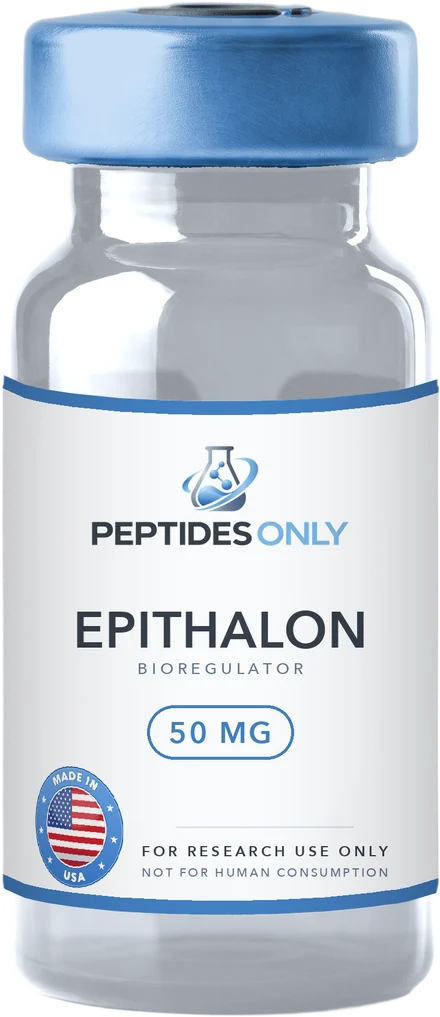
Epithalon
Tetrapeptide studied in telomerase and pineal research.
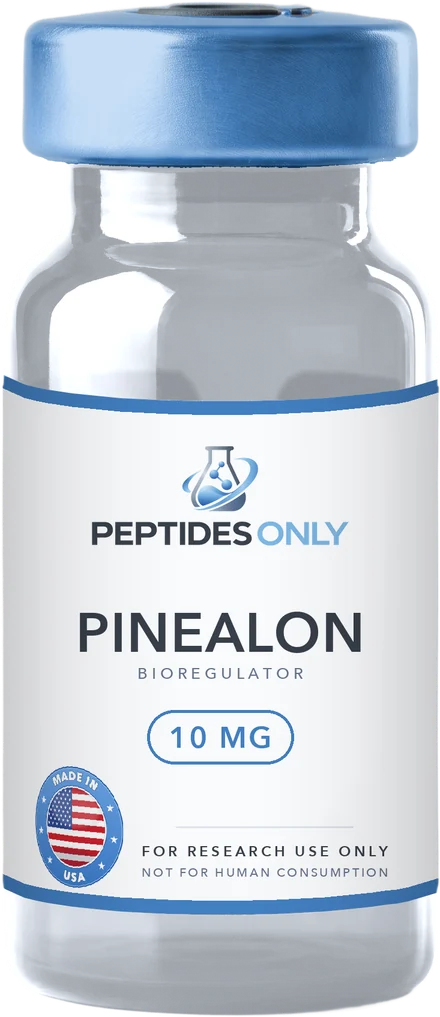
Pinealon
Tripeptide bioregulator explored in neuroprotection research.
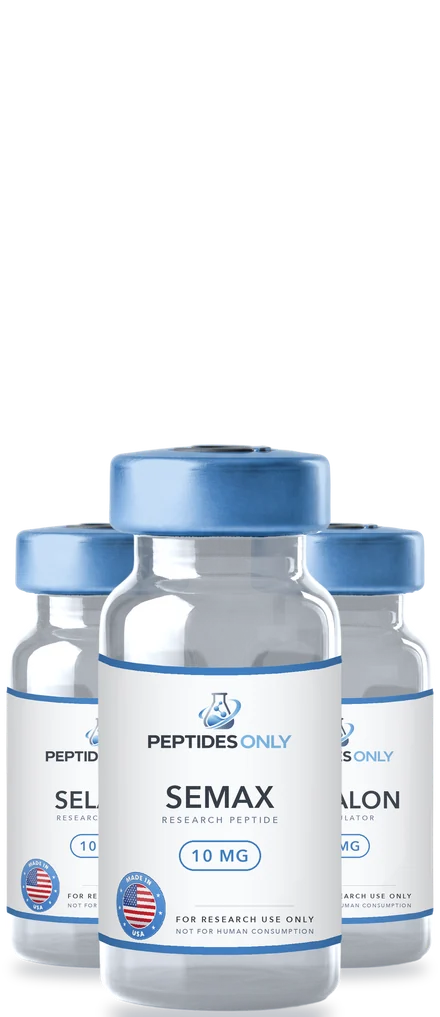
Semax / Selank / Pinealon Set
Semax 10 mg, Selank 10 mg and Pinealon 10 mg, supplied together.
- Semax10 mg
- Selank10 mg
- Pinealon10 mg