Lyophilized vial
BPC-157
Stable gastric pentadecapeptide, a staple of tissue-repair research.
$85.00
2 for $85 · $42.50/vial

Long-acting IGF-1 analogue with reduced binding-protein affinity.
The certificate for the current lot is being uploaded. Every order ships with the COA for its lot, or request it now.
Long-acting IGF-1 analogue with reduced binding-protein affinity.
1 mg per vial, as a lyophilized powder in a sealed glass vial with a crimped cap. The lot number on the label matches the certificate of analysis in the COA library.
Store lyophilized powder frozen (−20 °C) or refrigerated, sealed and away from light. Once reconstituted, keep refrigerated (2–8 °C).
Handle in a laboratory setting using appropriate protective equipment. Consult the certificate of analysis and safety data for lot-specific information.
IGF-1 LR3 (Long R3 IGF-I) is an 83-amino-acid analog of human insulin-like growth factor-I with arginine in place of glutamate at position 3 and a 13-residue N-terminal extension. Both changes sharply reduce binding to IGF-binding proteins, which makes it more potent than native IGF-I in many systems and explains its long-standing use as a growth-factor supplement in serum-free cell culture and bioprocessing.
IGF-1 LR3 came out of work in Adelaide in the early 1990s by Francis, Ballard and colleagues on recombinant IGF-I fusion analogs. It joins the first 11 amino acids of methionyl porcine growth hormone and a Val-Asn linker (13 residues) to the 70-residue human IGF-I sequence carrying an Arg3 substitution, giving 83 residues in all1.
The design rests on one observation: IGF-I analogs that bind poorly to IGF-binding proteins (IGFBPs) are more potent than IGF-I wherever those proteins are present. [Arg3]-IGF-I bound very poorly to IGFBP-2 and only slightly less well than IGF-I to the type-1 IGF receptor, so reduced IGFBP binding, rather than stronger receptor binding, explained its higher potency in rat L6 myoblasts2. Adding the N-terminal extension produced Long [Arg3]-IGF-I, which matched des(1-3)IGF-I as the most potent analog in cell lines that secrete IGFBPs; in chicken embryo fibroblasts, which secrete none detectably, it was less potent than IGF-I1.
Most published use of IGF-1 LR3 is in vitro. In serum-free Chinese hamster ovary (CHO) cell lines producing recombinant proteins, LongR3 sustained viability under production conditions better than insulin, the growth factor most often used in that setting3. A transcriptome study of CHO cells cultured with or without LongR3 linked it to enhanced growth and delayed cell death4, and in in vitro maturation of bovine oocytes it performed comparably to native IGF-I and fetal bovine serum5.
The property that matters in culture is the one seen in the original experiments: the analog's advantage over IGF-I appears in cells that secrete IGFBPs into the medium and disappears in cells that do not1.
IGF-1 LR3 has never been approved as a medicine for human use. IGF-I and its analogs are prohibited in sport, and anti-doping laboratories have developed mass-spectrometry methods to detect LongR3-IGF-I and its breakdown products, reporting oxidized, lower-quality forms in black-market material11. Peptides Only supplies it only as a research reagent.
The core pharmacology comes largely from the group that developed the analog, and most in vivo data are from rats, pigs and mice in studies published in the 1990s and 2000s6,7,8. There are no controlled human studies. Because potency tracks how much IGFBP a system contains1, results from one cell type or species do not transfer automatically to another.
Quality also matters: oxidized forms have been found in black-market products11. Every Peptides Only lot ships with an independent, lot-matched certificate of analysis covering HPLC purity and mass-spec identity, and our guide on how to read a peptide COA explains what to check.
Native IGF-I has 70 residues. IGF-1 LR3 adds a 13-residue N-terminal extension and swaps Glu3 for Arg, giving 83 residues. The changes cut binding to IGF-binding proteins, so the analog is more potent than IGF-I in systems that contain those proteins1,2.
It is used in serum-free media as an alternative to insulin; in one CHO-cell study it sustained viability under production conditions better than insulin3. Reduced IGFBP binding is the usual explanation for its potency in cultures that secrete binding proteins1.
No. It has never been approved as a medicine, and IGF-I analogs are prohibited in sport11. Peptides Only supplies it for laboratory research only.
Yes. LR3, Long R3, LongR3 and Long [Arg3]-IGF-I all refer to the analog described by Francis and colleagues in 19921.
Lyophilized peptides are generally kept cold, dry and away from light. General guidance is in peptide storage and stability; Peptides Only does not give usage instructions.
Research summary reviewed 2026-10-26 against the cited literature.
Stable gastric pentadecapeptide, a staple of tissue-repair research.
Copper-binding tripeptide used in collagen and skin-matrix research.
Essential coenzyme for studies of cellular metabolism and ageing.
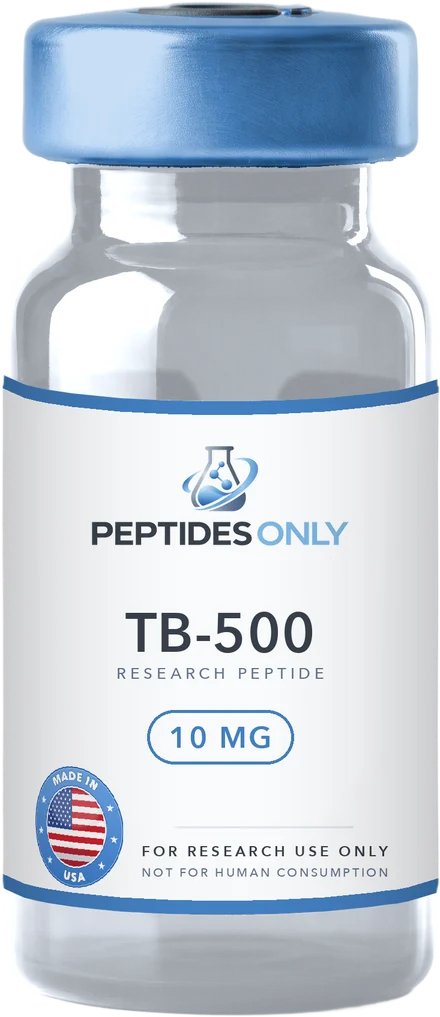
Thymosin beta-4 fragment studied for cell migration and repair.
Operated by DND Wellness LLC · 1309 Coffeen Ave, Suite 1200, Sheridan, WY 82801.
support@peptides-only.com · (508) 404-8124
Use the chat widget to ask a question. Informational and promotional text messages require separate, optional consent. Message frequency varies. Msg & data rates may apply. Reply STOP to unsubscribe or HELP for help. Consent is not a condition of purchase. 21+.
SMS consent & support · SMS terms & Terms of Service · Privacy Policy